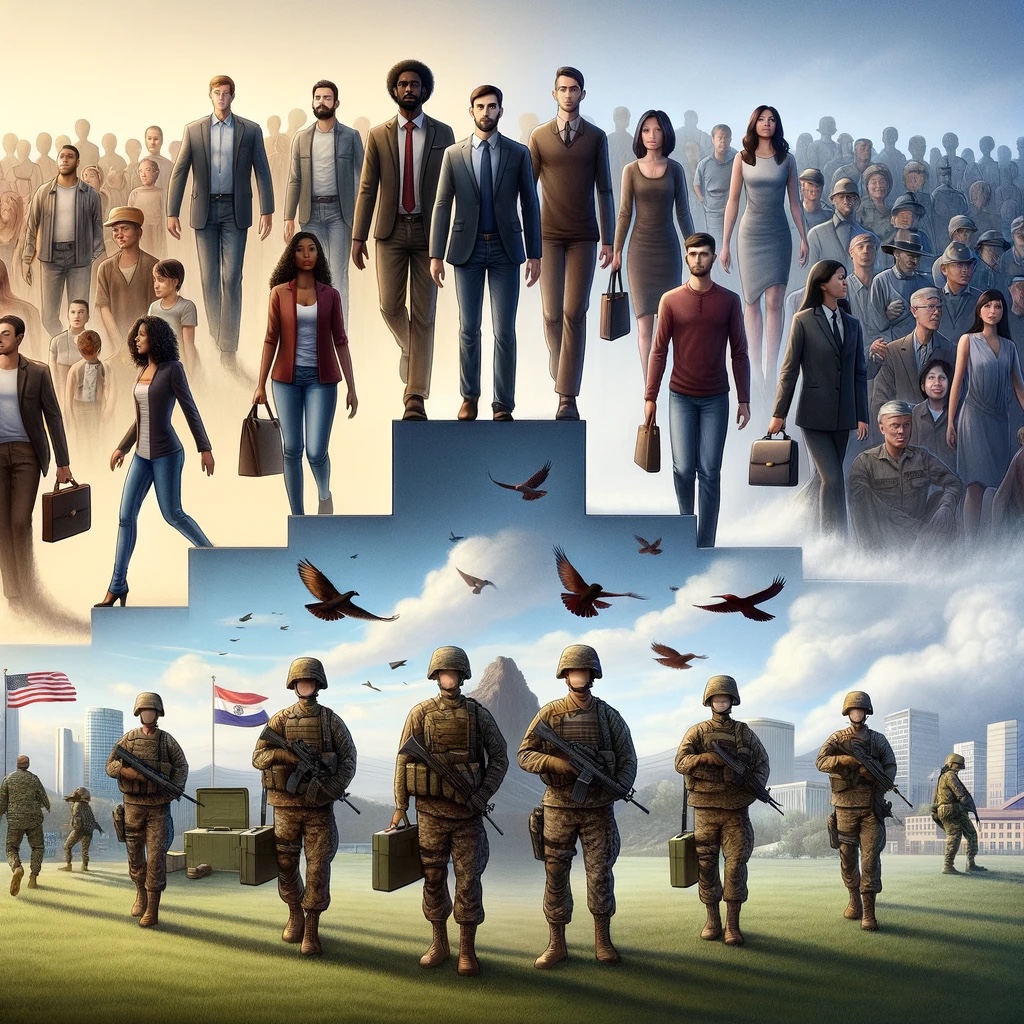
The relationship between military service and a nation’s propensity for peace or conflict, as illuminated in recent discussions on South Korean politics, presents a fascinating lens through which to view the dynamics of democracy and militarism. The central thesis posits that a closer integration of civilians with the military, particularly in nations with conscription, correlates with a reduced likelihood of government-initiated warfare. This concept aligns with the broader democratic peace theory, suggesting a tangible link between the structure of military service and a nation’s peace orientation.
The Theory of ‘Conscripted Citizenry and War Deterrence’
At the heart of this theory is the belief that diminishing the divide between civilians and the military acts as a societal check against precipitous war decisions. In a conscription-based system, where the average citizen is likely to serve in the military, there emerges a more profound societal connection to the ramifications of war. This shared military experience engenders a collective sense of responsibility and prudence in conflict-related decisions.
Case Study: South Korea’s Liberal Presidents
In the context of South Korea, this theory gains further credence when considering the presidencies of leaders like Roh Moo-hyun and Moon Jae-in. Both were merely drafted soldiers, not officers, embodying the very essence of citizen-soldiers envisaged in the conscription model. Their administrations, noted for their relatively peaceful stances, exemplify the hypothesis that leaders with firsthand conscription experience may be more inclined towards peaceful conflict resolution, understanding the true cost of war from a non-elite soldier’s perspective.
Counterarguments and Limitations
Despite its compelling narrative, the theory isn’t without its detractors. Critics argue that the correlation between conscription and a peaceful foreign policy might not necessarily imply causation. Other factors, such as economic ties, democratic institutions, and global norms, are also influential in shaping a nation’s war and peace decisions. Moreover, there have been cases where conscripted armies engaged in extended conflicts, suggesting that conscription, by itself, is not a peace guarantor.
Conclusion
The interplay between conscription and a nation’s peace policies is intricate and nuanced. The theory positing that mandatory military service deepens societal ties to the military, thereby discouraging rash wartime engagements, is persuasive yet contested. The cases of South Korean liberal presidents, who served as drafted soldiers, add a unique perspective to this debate. Nonetheless, it is crucial to consider the broader geopolitical, economic, and socio-political landscapes in assessing this relationship. This subject remains ripe for continued exploration, particularly in understanding how different models of military service influence national policies on conflict and peace.
 Atsushi's Life in Korea