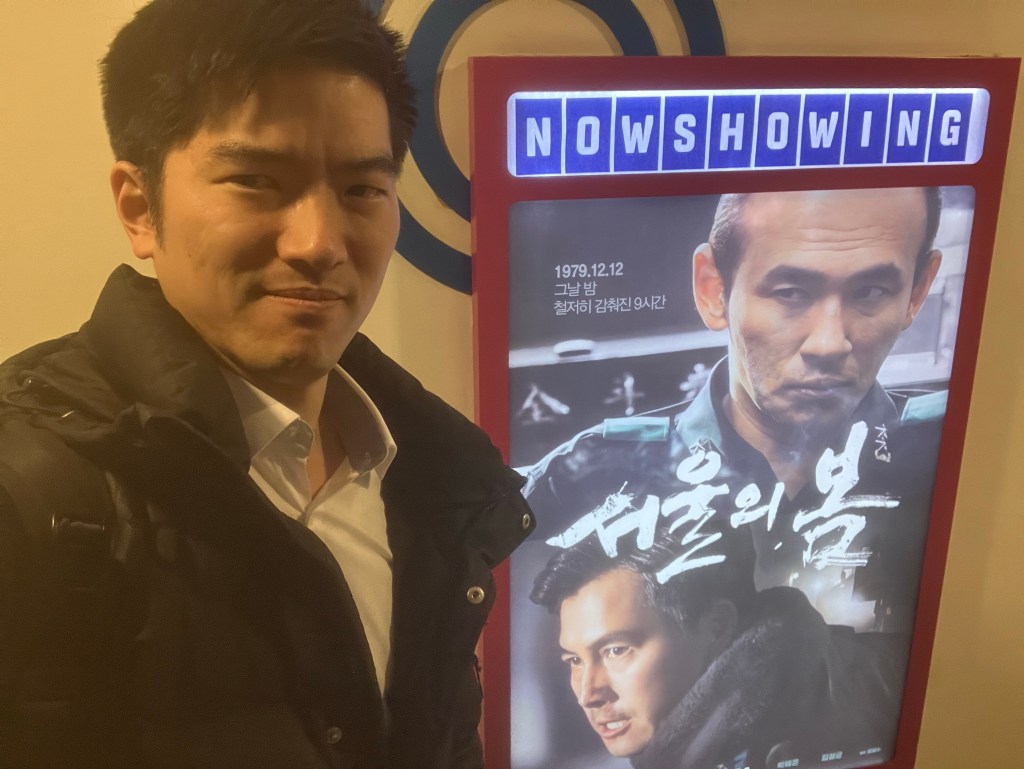
In the dim afterglow of the movie theater, “12.12: The Day” or literally “The Spring of Seoul” left me with a contemplative silence, pondering over the delicate dance of power and the pivotal role of civilian governance in shaping history. This film does more than recount South Korea’s second military coup; it delves deep into the heart-wrenching struggle for democracy in the shadow of autocracy.
With Jung Woo-sung’s commanding presence, the film brings to life the chilling days when military might overpowered civilian voices, underscoring the urgency for civilian control in governing structures. His portrayal is not just of a character but of an ideal, the cool demeanor masking a simmering defiance against the oppressive regime.
The film’s most striking moment—a dramatic reenactment of the civilian president being coerced to approve documents under the watchful eyes of generals—resonates profoundly. As the coup leader, Chun Doo-hwan, reaches to claim the signed document, President Choi Kyu-ha pulls it back to add the date and time. This subtle act of resistance, a last stand of a president overpowered by military insurgents, is a powerful commentary on the struggle to maintain a semblance of order and dignity amidst the chaos.
This scene is a cinematic embodiment of the internal turmoil faced by leaders who find themselves at the mercy of forces beyond their control. It is a visual metaphor for the tension between military might and the principles of democracy—a poignant reminder of the often-unseen battles fought in the silent chambers of power.
“The Spring of Seoul” is not merely a historical recount; it is a riveting narrative that captures the essence of an era defined by its struggle for democratic integrity. It is a film that speaks volumes about the importance of civilian oversight in the halls of power and the resilience of the human spirit in the face of authoritarianism.
As the story of “The Spring of Seoul” unfolds, we are transported to a time of political upheaval, witnessing the delicate interplay of force and resistance. The film stands as a testament to those who stand defiant in the face of despotism, those who, despite the odds, leave their mark on history, however small it may seem.
Leaving the theater, one cannot help but feel a sense of solidarity with those who fought for democracy, inspired by their courage and the film’s poignant portrayal of their struggles. “The Spring of Seoul” is a stark reminder of the past’s lessons and a call to remember the enduring need for a government of the people, by the people, for the people. It is a cinematic masterpiece that echoes with the voices of history, urging us never to forget the price of freedom and the value of a civilian-led democracy.
 Atsushi's Life in Korea