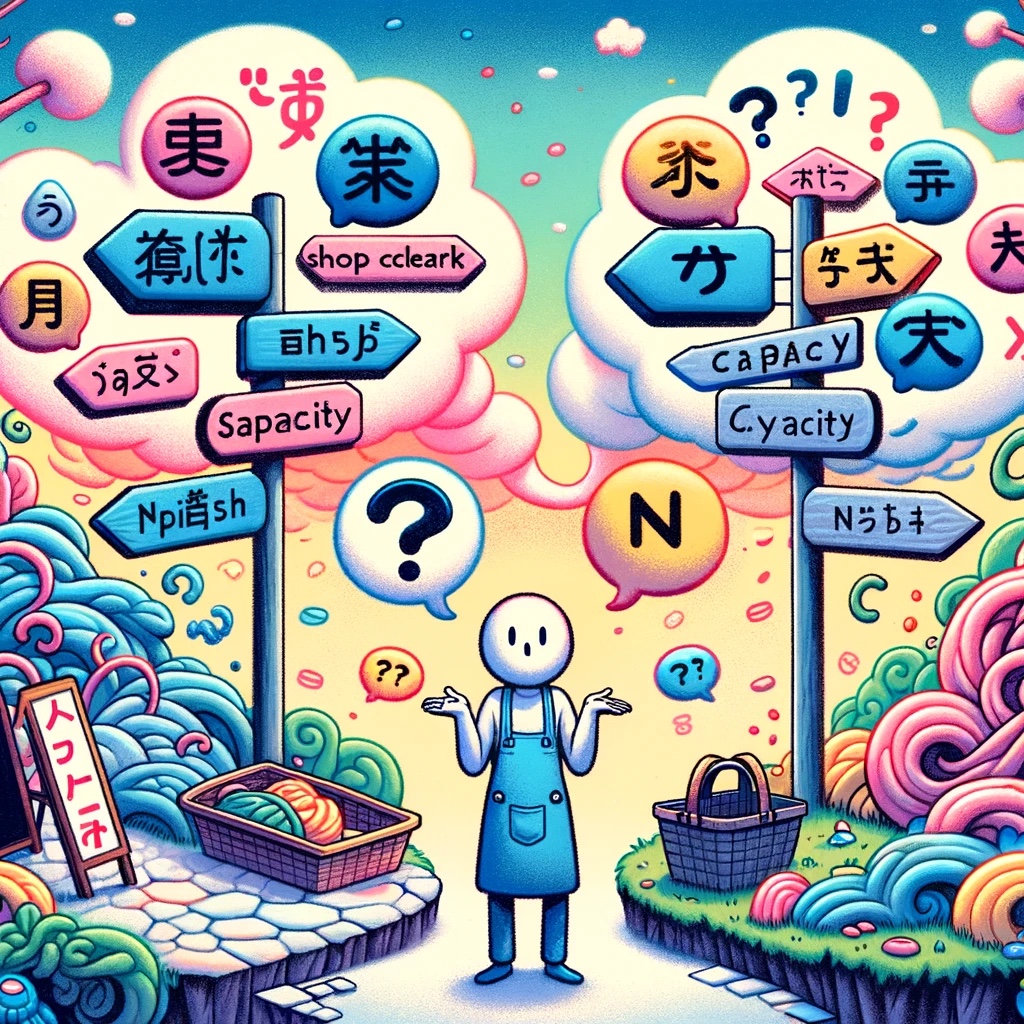
The Intriguing Case of ‘店員’ and ‘定員’
Recently, a fascinating observation made waves on Twitter involving the Japanese language, particularly a common typing error where ‘店員’ (shop clerk) was mistakenly written as ‘定員’ (capacity). This incident isn’t just a mere typo but rather a window into the intricate world of Japanese phonetics, especially the unique pronunciation of ‘ん’ (n).
The Chameleon of Japanese Phonetics: ‘ん’
The Japanese ‘ん’ holds a special place in the language’s phonetic landscape. Unlike anything in English or many other languages, this sound morphs dramatically based on the following consonant or vowel. When ‘ん’ precedes a vowel, as in ‘店員’ (‘tenin’), its sound almost vanishes, elongating the succeeding vowel. This phonetic phenomenon can lead to auditory ambiguities, making ‘店員’ sound eerily similar to ‘定員’ (‘teiin’).
The Linguistic Implications
This characteristic of ‘ん’ is not just a linguistic curiosity; it showcases the depth and complexity inherent in language. For native speakers, this nuance is navigated with ease, but for learners of Japanese, it presents a fascinating challenge. The variation in ‘ん’s’ pronunciation underscores the importance of context in understanding spoken Japanese.
Technology and Language: A Complicated Relationship
The ‘店員’ vs ‘定員’ mix-up also highlights the intersection of language and technology. Japanese input systems, which often provide multiple character options for the same phonetic input, can sometimes be tricked by these phonetic nuances. This raises intriguing questions about how technology can and should adapt to accommodate the unique aspects of language.
The Joy of Learning and the Complexity of Communication
For learners of Japanese, understanding the subtleties of ‘ん’ is crucial, not just for accurate pronunciation but also for understanding the cultural richness embedded in linguistic idiosyncrasies. It reflects the joy and complexity of learning a new language, where even a small sound can open up a world of meaning.
Conclusion
The Twitter typo involving ‘店員’ and ‘定員’ is more than just a humorous mishap. It’s a testament to the intricacies of Japanese phonetics and a reminder of the continuous interplay between language, culture, and technology. As we delve deeper into understanding these nuances, we unlock more layers of this fascinating language, appreciating both its complexity and its beauty.
 Atsushi's Life in Korea