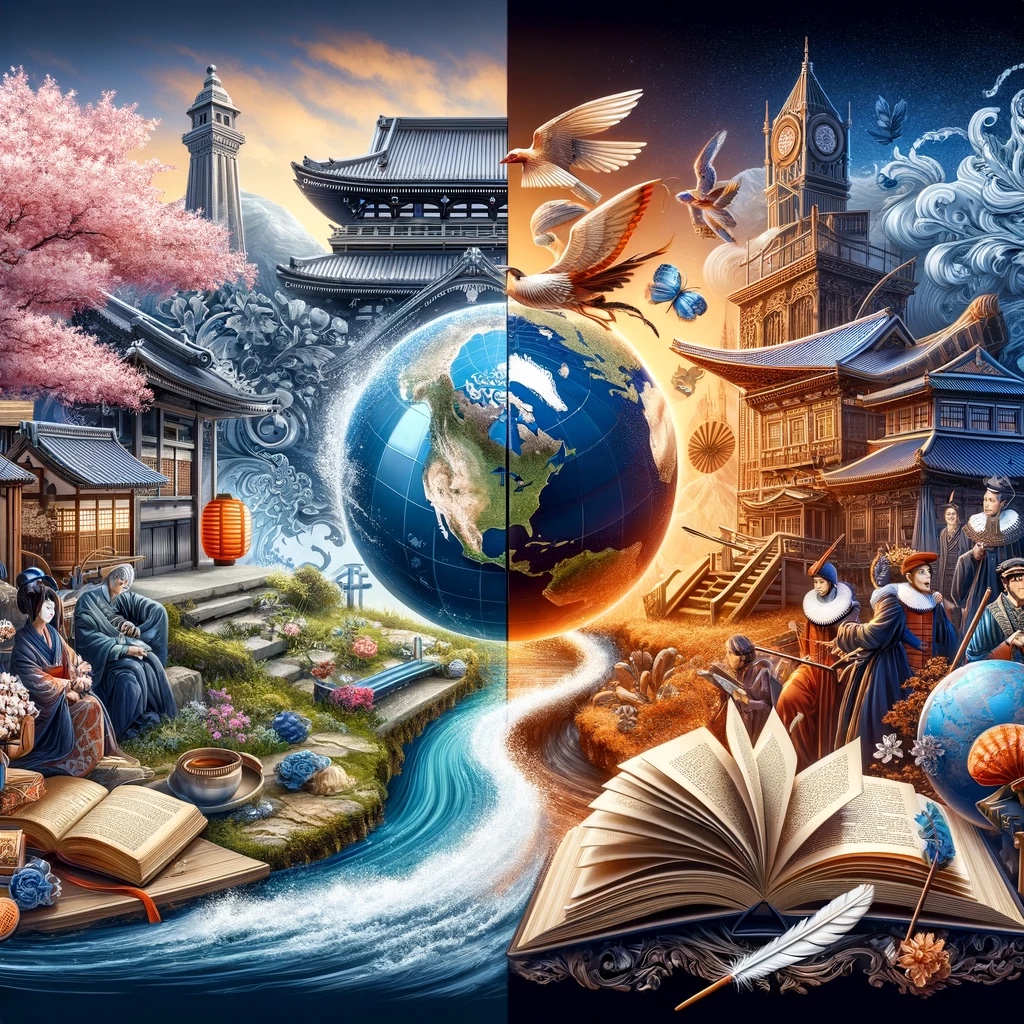
The Isolation and Introspection of Japanese Classics
Japan’s geographical isolation, surrounded by seas, has played a pivotal role in shaping its unique cultural and literary landscape. Historically, while the country absorbed significant influences from China and the Korean Peninsula—such as Buddhism, Confucianism, and the adoption of Kanji—its literary world often remained introspective.
Japanese classics like “The Tale of Genji” and “The Pillow Book,” which emerged during the Heian period, are prime examples of this inward focus. They delve deep into the court life of Japan, exploring the nuances of human emotions and the intricate nature of social relationships within the Japanese aristocracy. The influence of Chinese culture and literature is undeniable, yet it’s more about the importation of ideas than the depiction of active cross-cultural exchanges.
The Dynamic Interconnectivity of Western Europe
Contrastingly, the literature of Western Europe, especially around the North Sea, tells a different story. These regions, thriving on active trade, warfare, and diplomacy, were a melting pot of cultures and interactions. The works of Shakespeare are a testament to this cultural dynamism. His plays often set in various European countries, such as France in “Richard III,” Denmark in “Hamlet,” and Scotland in “Macbeth,” reflect a world where borders were more fluid, and international relations were a part of everyday life.
The frequent appearances of these nations in Shakespeare’s plays not only reflect the geopolitical realities of the time but also the audience’s familiarity with these regions. The bard’s audience was acutely aware of the broader European stage on which their country was a key player. This outward-looking perspective is markedly different from the inward-looking nature of Japanese literature of the same era.
Divergent Paths Shaped by Geography and Policy
These contrasting literary traditions underscore how geography and historical policies like Japan’s Sakoku (closed country) policy significantly influenced cultural development. While Europe was moving towards a more interconnected world, Japan was introspectively solidifying its unique cultural identity.
Reflections in Modern Perspectives
Today, these historical differences offer rich insights into the cultural fabric of Japan and Western Europe. Understanding the historical context of these literary works enriches our appreciation of global cultural diversity and the varied ways societies develop their unique identity, whether in isolation or through active exchange.
This exploration into the literary worlds of Japan and Western Europe reveals the profound impact of geographical and political realities on cultural and literary development. It’s a fascinating journey that not only highlights the differences but also the universal human experiences that these literary traditions capture, despite their divergent paths.
 Atsushi's Life in Korea