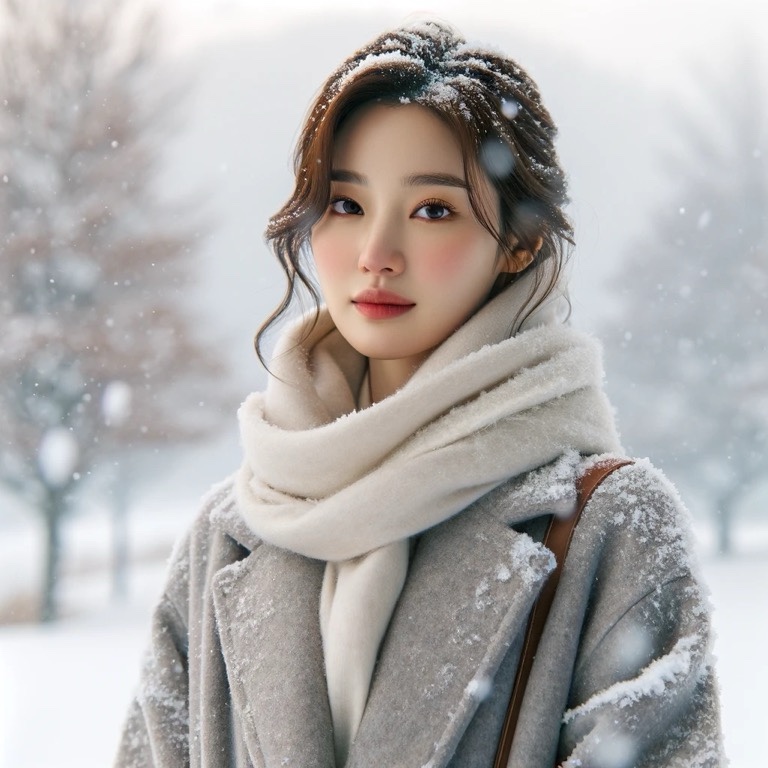
In the intricate tapestry of languages around the world, each has its unique quirks and idiosyncrasies. One such fascinating aspect can be seen in the Korean language, especially in its use of honorifics or 존댓말 (jondaetmal). This was vividly illustrated to me recently during a snowy day in Seoul.
While overhearing a conversation between a local and a client, I was intrigued by the phrase, “안녕하세요~책임님! 대전은 눈이 오시나요?” Roughly translated, this means, “Hello! Is it snowing in Daejeon?” What caught my attention was not the question itself, but the way it was framed. In Korean, typically, when a place name is the subject, honorifics are not used. Yet, here was an example of an unusual application of politeness.
The Intricacies of Korean Politeness
In Korean, honorifics are a crucial part of the language, reflecting respect and social hierarchy. They are used based on age, social status, and the relationship between speakers. The standard rule is straightforward: use honorifics when referring to or speaking with someone of a higher status or older age.
However, the phrase I heard bends this rule. By applying honorifics to a non-living subject like a city, the speaker was extending respect not just to the person but also metaphorically to the place they were inquiring about. It’s a subtle, yet profound way of showing deference and politeness.
Beyond Grammar: Cultural Implications
This example underscores how language and culture are deeply intertwined. In Korean culture, respect and politeness are paramount, often taking precedence over rigid grammatical rules. This linguistic flexibility reflects an underlying cultural ethos where harmony and respect in interpersonal relationships are highly valued.
A Learning Curve for Language Learners
For learners of Korean, such instances can be both intriguing and daunting. They highlight the need to not only understand the language’s grammatical structure but also its cultural context. Learning Korean is not just about mastering vocabulary and syntax, but also about understanding when and how to bend the rules to convey the right level of respect and politeness.
Conclusion: A Window into Korean Etiquette
This small, seemingly insignificant conversation snippet offers a window into the nuanced world of Korean etiquette. It illustrates how the Korean language, with its elaborate system of honorifics, not only communicates information but also social values and relationships. As a student of language and culture, such instances are not just linguistic anomalies but rich insights into the societal fabric of a country. In the end, they remind us that language is more than a tool for communication; it’s a reflection of the values and norms of its people.
 Atsushi's Life in Korea