The Warrior in My Dreams: How My Taekwondo Past Resurfaced in Sleep

Introduction:
Last night presented an unexpected journey back to my days as a taekwondo enthusiast in my twenties. In a vivid dream, I found myself engaged in a fierce battle with bandits, a scenario that led to a surprising and somewhat humorous revelation about the connection between our past experiences and our subconscious mind.

Body:
The dream was intense and action-packed. I was facing a group of bandits, and the situation called for a high kick, a move I had perfected during my taekwondo training years ago. In the heat of the moment, I executed the kick with such precision that it transcended the boundaries of my dream. To my surprise, and my wife’s alarm, I had actually kicked the wall of our bedroom, waking us both with the loud thud.

This incident led me to ponder the fascinating ways our past experiences, especially those involving physical training like martial arts, can deeply embed themselves in our subconscious. Taekwondo, a sport I had passionately pursued in my twenties, evidently left a lasting imprint on my muscle memory and mind.

The phenomenon of acting out dreams is not uncommon. Often referred to as REM behavior disorder, it typically occurs when the paralysis that usually accompanies REM (Rapid Eye Movement) sleep does not function properly. However, in many instances, it’s simply a manifestation of deeply ingrained memories and skills resurfacing in our sleep.

For me, this experience was a reminder of the warrior spirit I had cultivated during my taekwondo days. It was as if the discipline, agility, and strength I had honed were finding a way to express themselves, even years after I had left the dojo.

Conclusion:
While the abrupt awakening and the need to explain the sudden noise to my wife were less than ideal, this experience offered a humorous and insightful glimpse into the powerful ways our past experiences shape our subconscious. It’s fascinating to consider that the skills we develop, the passions we pursue, and the experiences we accumulate don’t just fade away; they become a part of who we are, sometimes emerging in the most unexpected of ways – even as a high kick in the middle of the night.

Class Perceptions in Modern Britain: Insights from ‘Beckham’

The Beckham Episode: A Modern Reflection of Class Dynamics

In the Netflix documentary “Beckham”, there’s a notable scene where Victoria Beckham claims to have grown up “very, very working class.” David Beckham humorously interjects, pointing out the inconsistency in her claim by asking about the type of car her father drove, revealing it to be a Rolls-Royce. This exchange humorously yet poignantly underscores the nuanced nature of class perceptions in Britain. Victoria’s claim and David’s reaction reveal how class identity is not always clear-cut and can be subject to personal interpretation.

Historical Context of the British Class System

The British class system, traditionally rigid and sharply divided, has evolved over time. While historically determined by birth and wealth, modern Britain sees a more permeable class structure, where education and professional success can lead to upward social mobility. Yet, as the Beckham episode illustrates, perceptions and self-identifications of class can vary significantly from the traditional definitions.

Class Categories in Britain

  1. Lower Class: Often associated with long-term unemployment or homelessness.
  2. Working Class: Includes unskilled or semi-skilled workers.
  3. Middle Class: A broad category encompassing professionals and business owners.
  4. Upper Class: Associated with high wealth, including “new” and “old” money.
  5. Aristocracy: The highest echelon, including the royal family and titled nobility.

Cultural and Social Factors

The British class system today is influenced not only by economic status but also by cultural and social factors such as family background, education, and even accents. The Beckham episode from the documentary reveals how these factors play a role in how individuals perceive and articulate their class identity.

Comparative Perspective: Japan vs. Britain

Japan’s class system, primarily divided between the imperial family and the general populace, presents a more straightforward social structure compared to Britain’s multi-layered and nuanced system. The contrast highlights the unique complexities of the British class system, where class identity can be a matter of personal perception and cultural influence.

Conclusion

The conversation between David and Victoria Beckham in the documentary serves as a microcosm of the broader dialogue on class in modern Britain. It demonstrates that while the traditional class system has evolved, perceptions and self-identification of class remain complex and multifaceted. This complexity sets the British class system apart from more straightforward social structures like that of Japan.

For a more in-depth exploration of the British class system, click here.

The Korean Memorial in Gunma: A Case of Political Crackdown Against Minorities and Dissenting Voices

The situation surrounding the Korean memorial in Gunma no Mori, Takasaki, speaks volumes about the current state of political tolerance and minority rights in Japan. This memorial, erected in 2004 and owned by the “Association to Preserve the Memorial of Memory, Reflection, and Friendship,” stands as a poignant reminder of the Korean laborers forced into brutal work during World War II under the Imperial Japanese regime. The Gunma Prefectural Assembly initially supported this initiative, providing land for the memorial. However, the refusal to renew the memorial’s installation permit in 2014 signals a worrying trend of political crackdown, particularly against minorities and citizens critical of the conservative administration.

The pretext for this non-renewal was a speech made during a 2012 ceremony at the memorial, referencing “forced conscription,” which the prefectural government labeled as a breach of the non-political condition attached to the memorial’s installation. This move and the subsequent legal battle, culminating in the 2022 high court ruling upholding the non-renewal, highlight a disturbing use of legal and bureaucratic mechanisms to silence uncomfortable historical truths.

This incident goes beyond a mere controversy or legal disagreement. It represents a stark example of how governmental powers can be used to suppress minority voices and historical narratives that challenge the status quo. The memorial, serving as a historical testament to the suffering of Korean individuals under Japanese rule, becomes a casualty in a broader political battle against those who dare to bring to light aspects of history that are inconvenient to the current administration.

The refusal to renew the permit is not just an act of historical denial but an act of political repression. It sends a clear message to minorities and critical voices in Japan: their perspectives and experiences, no matter how grounded in historical fact, are subject to censorship and erasure if they conflict with the government’s narrative. Such actions are detrimental to the principles of democracy and freedom of expression, essential foundations of any progressive society.

In conclusion, the situation surrounding the Korean memorial in Gunma no Mori is a critical reflection of the challenges faced by minorities and dissenting citizens in Japan today. It underscores the need for vigilance against political powers that seek to rewrite history to serve their agendas. Recognizing and preserving the truth of historical events, especially those that involve minority suffering and exploitation, is crucial for a nation’s moral and ethical progress. The Korean memorial issue is a call to action for all who believe in the principles of historical truth, minority rights, and freedom of expression.

Reflecting on Shigeru Mizuki’s “Showa History”: A Journey Through War, Peace, and Ideologies

As I recently delved into Shigeru Mizuki’s “Showa History,” I found myself immersed in a vivid portrayal of Japan’s Showa era (1926-1989). Mizuki, renowned for his unique style and storytelling in works like “GeGeGe no Kitaro,” masterfully blends personal experiences with historical events, providing a fascinating glimpse into Japan’s societal and cultural evolution during this tumultuous period.

What struck me most was the distribution of themes in Mizuki’s narrative. Approximately sixty percent revolves around war and Mizuki’s personal life, which resonates deeply considering his own military service during World War II. This focus mirrors the experiences of many from his generation, including my own grandfather, who endured hardships on the Philippine front.

However, what felt refreshingly new in Mizuki’s narrative was the significant emphasis – around thirty percent – on communism, a potent force in the 20th century. The post-war era in Japan saw a rise in communist and socialist ideologies as a response to economic hardships and social inequalities. The legalization of the Japanese Communist Party in 1945 and its influence in the democratization movement post-war is a testament to this shift. Mizuki’s exploration of these themes reflects the complex socio-political landscape of the time.

But perhaps the most impactful aspect of Mizuki’s work is his affirmative depiction of Japan’s post-war peace stance. Having experienced the horrors of war firsthand, Mizuki, like many of his generation, came to deeply value peace. This sentiment is mirrored in Japan’s post-war constitution, especially the pacifist Article 9. His works go beyond historical documentation, encapsulating the profound emotions and experiences of an entire generation.

In essence, “Showa History” by Shigeru Mizuki is not just a record of historical events; it’s a narrative steeped in the emotional and experiential realities of a generation that witnessed the worst of war and the arduous journey towards peace and reconstruction. Mizuki’s personal insights interwoven with the era’s prevalent ideologies and sentiments make it an intriguing read for anyone interested in understanding the depth and complexities of Japan’s Showa era.

Embracing Diversity: The Significance of a Ukrainian-Born Miss Japan

In a recent and groundbreaking event, a Ukrainian-born woman who naturalized as a Japanese citizen emerged victorious in a Japanese beauty pageant. This remarkable win, however, has not been without its controversies. It seems that some individuals, fixated on the notion of a “pure Japanese” identity, have expressed their discontent. But this situation opens a crucial dialogue about diversity and human rights awareness in Japan.

Japan, like many nations, is a tapestry of diverse identities and stories. The idea that a national identity must be tied to bloodlines and birthplaces is an outdated concept that fails to recognize the dynamic nature of modern societies. The victory of a Ukrainian-born woman in a Japanese beauty pageant is not just a win for her; it’s a win for the concept of a more inclusive and diverse Japan.

This event challenges the traditional views on what it means to be Japanese. It’s a reflection of the changing demographics and the evolving cultural landscape of the country. Japan, historically perceived as a homogeneous society, is gradually becoming more diverse. People from various ethnic backgrounds, cultures, and experiences are calling Japan home. Recognizing and embracing this diversity is essential for the nation’s continued growth and global relevance.

The negative reactions from a minority, focusing on racial purity, underscore a deeper need for human rights education and awareness. It’s crucial to understand that the concept of human rights extends beyond mere tolerance. It’s about appreciating and valuing the richness that different backgrounds bring to the societal fabric. A beauty pageant, often seen as a celebration of external beauty, can thus become a powerful platform to advocate for inclusivity and to challenge stereotypes.

Furthermore, the success of this Ukrainian-born Japanese citizen is a testament to the possibilities that open up when a society embraces diversity. It highlights the potential for people, irrespective of their origins, to contribute meaningfully to their chosen communities. It’s a call to action for all of us to re-examine our biases and to broaden our understanding of identity in an increasingly interconnected world.

In conclusion, the uproar following the victory of a naturalized Japanese citizen in a beauty pageant is more than a mere controversy. It’s a mirror reflecting the current state of societal attitudes towards diversity in Japan. As the country continues to evolve, it’s imperative that its people also progress in their understanding and acceptance of a multifaceted national identity. Embracing diversity not only enriches a culture but also strengthens the bonds of community and nationhood. As we move forward, let’s foster a society where everyone, regardless of their background, can feel equally at home and valued.

Embracing Gratitude and Finding Balance in Life

As I sit down to write my gratitude journal, a practice I’ve recently adopted, I am reminded of the simple yet profound joys that each day brings. Today, my heart is full of appreciation for the moments I shared with my energetic one-year-old twins. Their boundless energy and strength never cease to amaze me, and playing with them has been a highlight of my day.

In the midst of our daily hustle, it’s easy to overlook these small blessings. However, today, as I watched them laugh and explore, I was reminded of how much I have to be thankful for. Their innocence and joy are contagious, and they remind me to cherish every moment.

Another reason for my gratitude today is my wife’s recovery from a neck strain. Thanks to the timely advice of her Pilates instructor, a simple painkiller brought her relief. It’s moments like these that make me appreciate the people who indirectly touch our lives, offering help and support when we need it most.

On a different note, I recently finished watching a Korean drama called “Dooms at Your Service.” The series concluded on a happy note, reinforcing my desire to live each day to its fullest. The show, with its ups and downs, was a reminder of how life’s journey is about embracing both the good and the bad.

Reflecting on my professional life, I’ve seen a shift in my perspective over the years. As a salesman, I once dreamt of earning an annual income of a hundred million yen, thinking that financial success was the ultimate goal. However, I’ve come to realize that there’s more to life than just chasing numbers. Inspired by an old Tokyo saying, “Don’t hold onto money overnight,” I now focus on doing my best every day rather than obsessing over financial targets. While being prudent with money is important, it’s also crucial to maintain a healthy mindset about it. This approach has brought a sense of ease and balance to my life.

In conclusion, taking the time to acknowledge and appreciate the small victories and joys of everyday life has been incredibly fulfilling. It has helped me find a balance between my personal and professional aspirations, allowing me to focus on what truly matters. As I continue this journey, I am reminded of the importance of living in the present and making the most of every day.

일본 며느리와 한국 가족: 문화적 차이를 이해하고 다리를 놓다

안녕하세요, 저는 한국인과 결혼해 한국에서 생활하고 있는 일본인입니다. 최근 SNS에서 일본 여성들이 한국인 시어머니, 시아버지에 대해 불평하는 것을 보며, 문화적 차이에 대한 이해와 존중의 필요성을 느꼈습니다. 이러한 경험을 바탕으로, 저는 교양 있는 마음으로 이 문제를 사람들에게 알리고자 이 글을 작성하게 되었습니다.

특히 트위터가 ‘X’로 명칭이 변경된 이후에도, 일본 여성들이 시어머니를 ‘🧂’ (소금) 이모티콘으로, 시아버지를 ‘🥑’ (아보카도)로 표현하는 것을 보았습니다. 이는 한국어 ‘시어머니’와 일본어 ’시오(しお)’의 언어적 농담과, ‘아버지’와 ‘아보카도’의 발음 유사성을 재미있게 표현한 것입니다. 그러나 이러한 표현이 문화 간 오해나 편견을 조장할 수도 있다는 점을 인지해야 합니다.1. 문화적 차이 인정하기: 각자의 배경과 문화를 인정하고 이해하는 것이 중요합니다. 2. 포용력과 존중의 자세: 가족 구성원 간의 존중과 포용은 가족 관계를 강화합니다. 3. 소통의 중요성: 열린 대화를 통해 문화적 오해를 해소해야 합니다. 4. 문화 교류 촉진: 서로의 문화를 배우고 경험하는 것은 유대감을 깊게 합니다.

여러분도 ‘X’에서 ‘🧂’ 또는 ‘🥑’ 이모티콘을 검색해보시기 바랍니다. 이를 통해 일본인 며느리와 한국인 시댁 간의 상호 작용과 문화적 차이를 더 잘 이해할 수 있습니다. 기계 번역을 활용하면 일본어로 된 글도 쉽게 읽을 수 있습니다.

저의 목적은 문화적 차이에 대한 이해와 존중을 증진시키는 것입니다. 서로 다른 문화적 배경을 가진 사람들이 함께 살아가는 우리 사회에서, 이러한 이해와 존중은 매우 중요합니다.

감사합니다.

The Fascination with Academic Backgrounds in Japan: A Cultural Insight

In Japan, there’s an intriguing social phenomenon where discussions about one’s educational background are not just common but are a subject of great interest. This cultural aspect reflects how deeply the value of education is ingrained in Japanese society.

Japanese people often engage in conversations about the rigorous entrance exams for universities and middle schools. It’s quite fascinating to observe adults, often well into their years, passionately discussing their experiences with these exams, even if they took place over two decades ago. What’s more remarkable is the audience’s unyielding interest in these stories, indicating a societal norm where academic history holds significant weight.

This emphasis on educational achievements in Japan might be likened to the class system in the United Kingdom, which is traditionally based on factors like region and occupation. However, in Japan, it seems that one’s academic history, particularly their performance in entrance examinations, plays a similar role in defining social strata.

This fixation on academic backgrounds in Japan reveals much about the values and priorities of Japanese society. It underscores the high regard for education and its perceived role in determining an individual’s success and social standing. As we delve into these cultural nuances, it becomes evident that educational achievements in Japan are more than just a matter of personal accomplishment; they are a key element in the social fabric.

Breaking the Mold: A Closer Look at Gender-Based Serving Practices in Japanese Restaurants

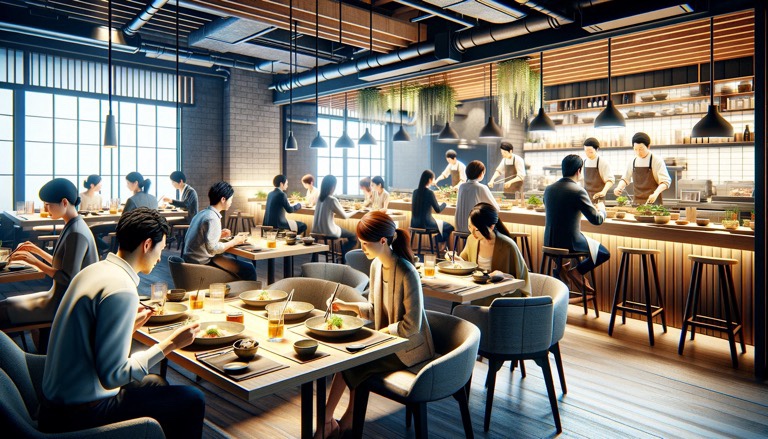
In a society that prides itself on meticulous service and customer satisfaction, a new conversation is emerging in Japan, one that challenges the norms of the food service industry. This discussion, gaining traction on various Japanese social media platforms, brings to light a subtle yet significant issue: the differing portion sizes served to women compared to men, despite ordering the same menu items at identical prices.

The Spark of the Conversation

The genesis of this debate can be traced back to a series of posts by women on social media. These posts, often accompanied by photographic evidence, illustrate a stark difference in the quantity of food served to them compared to their male counterparts. This revelation has not only surprised many but has also sparked a broader discussion about gender biases and the unspoken norms within the service industry.

Stereotypes or Misguided Assumptions?

At the heart of this controversy lies the assumption that women prefer smaller portions. This belief, while it may hold true for some, is a broad generalization that fails to consider individual preferences and dietary needs. Critics argue that such practices reinforce outdated gender stereotypes and overlook the diverse appetites and expectations of female customers.

A Question of Fairness and Transparency

The issue transcends mere portion sizes; it touches on the fundamental principles of fairness and equality in consumer rights. When customers, regardless of gender, pay the same price, they naturally expect equal value. This discrepancy in Japan’s restaurants raises critical questions about the equality and transparency in service, a concern that resonates in the wider context of gender equality and consumer rights.

Beyond Food: Reflecting Broader Gender Inequalities

Women’s advocacy groups and social activists are leveraging this discussion to highlight broader issues of gender inequality in Japan. The unequal food portions are symbolic of the subtle, often overlooked, ways in which women face disparity in everyday life. This situation has become a rallying point for those advocating for greater awareness and sensitivity towards gender-based assumptions in all sectors, including hospitality.

The Power of Social Media in Social Change

The role of social media in amplifying this issue is significant. It has provided a platform for collective storytelling and has galvanized public opinion. What started as individual observations has burgeoned into a movement pushing for change in the industry. It underscores the influence of digital platforms in raising awareness and shaping public discourse.

Moving Forward: The Path to Equality

As this conversation evolves, it serves as a poignant reminder of the ongoing challenges in achieving gender equality. It’s a call to action for industries to introspect and adapt, ensuring that services and products reflect the diverse needs and expectations of all customers. The hospitality industry, known for its attention to detail and customer care, now faces a critical opportunity to lead by example, breaking down stereotypes and setting new standards in equality and fairness.

In conclusion, the unfolding debate in Japan is more than just about food; it’s a microcosm of the larger struggle for gender equality. It’s a testament to the power of social media in initiating meaningful conversations and the need for continual advocacy in addressing deep-rooted societal issues. As we move forward, it’s imperative to keep these dialogues alive, fostering a society where equality is not just an ideal, but a lived reality for all.

A Luxurious Touch to Home Café: Gold-Leaf Chocolate After Lunch

There’s something incredibly comforting about enjoying a homemade lunch followed by a self-curated café experience right in the warmth of your own home. On this particular afternoon, as I settled into the familiar comfort of my dining space, the meal was made memorable not just by the flavors, but by the touch of luxury that accompanied it.

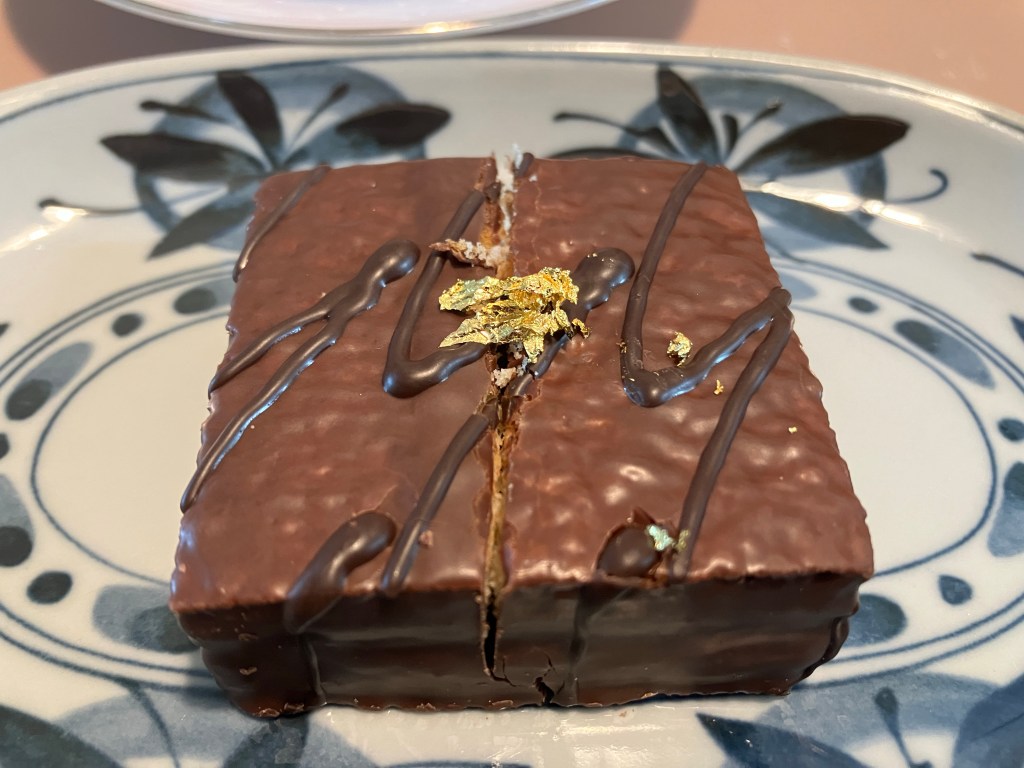
After a satisfying meal, it’s the simple pleasures that often bring the most joy—like a cup of strong, aromatic coffee paired with a decadent chocolate dessert. The chocolate, rich and inviting, sat on a plate patterned with delicate blue flowers, echoing the tranquility of a traditional Japanese garden.

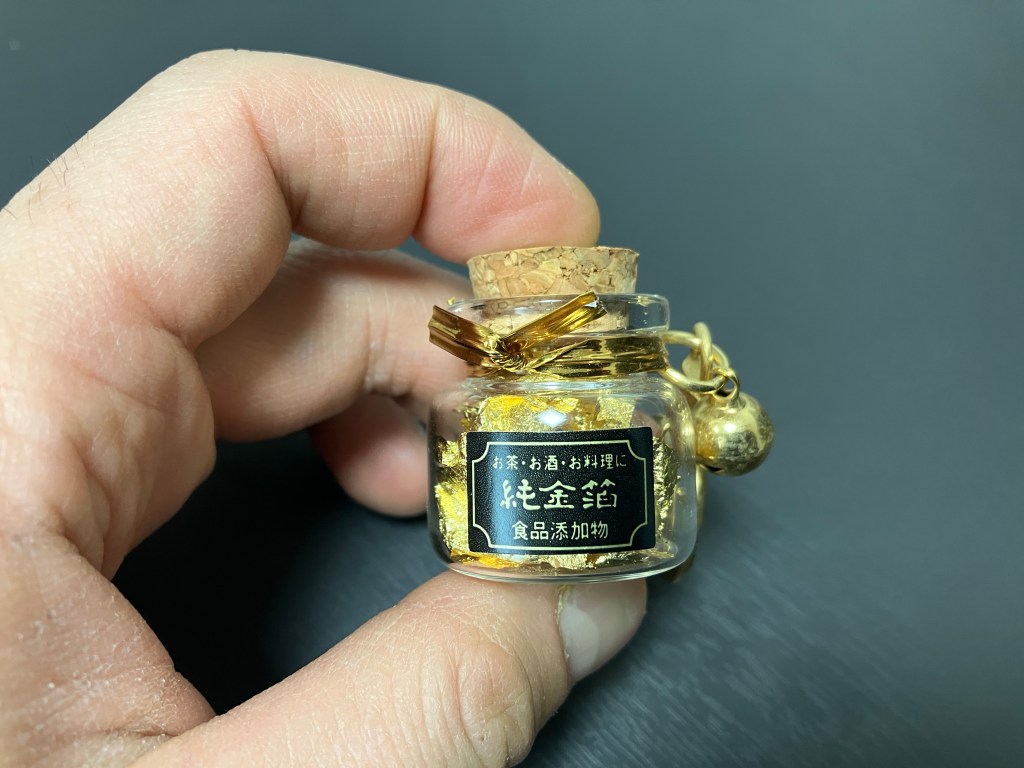
But the highlight wasn’t just the chocolate itself; it was the delicate sprinkling of gold leaf on top, a treasure I had brought back from my visit to the iconic Golden Pavilion in Kyoto. This gold leaf, traditionally used in Japanese culture to symbolize wealth and prosperity, was my way of invoking a bit of that luxury into my day.

There’s a belief that consuming gold can bring fortune and good luck, and with each bite of the chocolate, dusted with a hint of golden shimmer, I found myself hoping for just that. As the gold mingled with the chocolate in my mouth, it was more than just a taste sensation—it was a moment of reflection, a connection to a culture steeped in tradition, and a personal wish for prosperity.

At home, we can create moments of indulgence that remind us of the places we’ve been and the dreams we harbor. And as I sat back, savoring the last of my coffee, I couldn’t help but think that sometimes, the most luxurious experiences come from the simplest of pleasures, amplified by the stories we attach to them.

The Last Scoop: Embracing Growth and Change with Our Twins

As I stand in the kitchen, preparing yet another bottle of formula for our twins, I’m hit by a wave of nostalgia. The can of formula sits open, its contents dwindling with each scoop. This routine has been a steadfast part of our daily lives since the twins arrived. Now, as they’ve crossed the one-year milestone, we’re preparing to say goodbye to this stage. It’s a farewell to the ritual of mixing powdered milk with warm water, the ritual that nourished them from infancy.

When we first started, the task felt daunting. Ensuring the perfect temperature, the precise measurements—it was a science and art intertwined, a dance of parenthood I had yet to learn. I recall the early days, the kitchen lights dimmed in the late hours, the world silent but for the sound of the bottle warmer’s gentle hum. There was a sense of solitude in those moments, a quiet bond forming in the stillness of the night.

As I became more adept, the process evolved into a familiar rhythm. The soft thud of the scoop against the can, the powder sifting into the bottle, the liquid turning from clear to cloudy—all became second nature. I found an unexpected comfort in the precision, the reliability of the routine. It was a small, yet significant, part of their growth that I could control, could perfect.

Now, as I prepare to pack away the bottle warmer, I’m reminded of all the milestones we’ve celebrated. Each one has been a mixture of pride and a subtle sorrow for the phase that’s passed. Our twins are growing, thriving on more than just formula, their appetites for life expanding. It’s a natural progression, one that every parent knows, yet it’s hard not to feel a pang for the intimate moments that formula feeding provided us.

As parents, we witness a series of “lasts” that often go unmarked until they’re memories. The last time we rock them to sleep, the last time they crawl before they walk, the last time they reach for our hand before running off to play. This last can of formula represents one of those unspoken goodbyes.

Yet, with this goodbye comes a new hello. Hello to the world of solid foods, to self-feeding, to the messy, joyous exploration of taste and texture. As our twins take this next step, they do so with the eagerness that marks all of their discoveries.

In these moments of transition, I find myself grateful. Grateful for the journey, for the growth, and for the memories—each scoop of formula, each middle-of-the-night cuddle. Time may move swiftly, but it’s filled with these tiny, beautiful chapters of their lives—and ours.

So, as we move on from the formula days, I embrace the change with a full heart. It’s not just our twins who have grown; we have too. We’ve become more patient, more resilient, more filled with wonder at the little miracles we call our children.

The kitchen counter will soon be cleared of bottles and formula cans, but it will be filled with new adventures, new messes, and new memories. And I look forward to every single one.

The Shaping of Modern Japanese Self-Perception: A Historical Perspective

In the contemporary history of Japan, a prevalent self-perception among the Japanese has been the notion of being a resource-scarce yet densely populated nation. This belief was not unfounded and has roots that trace back to the early 20th century. My grandfather, born in the 1920s, often echoed this sentiment, encapsulating a view widely held by his generation.

Japan’s journey into modernity, particularly post-Meiji Restoration, saw it transform into a significant source of overseas emigration. This was especially pronounced in Western Japan, in regions like Hiroshima, Yamaguchi, and Okinawa. Here, the practice of primogeniture, where the eldest son inherits the family estate, left many younger siblings, particularly from farming families, with limited prospects. As a result, numerous second and third sons found themselves seeking opportunities far beyond Japan’s shores, venturing to places like Hawaii and the Americas.

Those who didn’t emigrate often migrated internally to cities like Osaka or Edo (modern-day Tokyo). In an agrarian society where land ownership equated to wealth, these younger sons, lacking inheritance, had little choice but to seek livelihoods elsewhere. Interestingly, they were often raised to support their elder brother, the heir to the family’s estate, reflecting a deep-seated cultural norm of familial duty and hierarchy.

This socio-economic backdrop also provides a lens to understand Japan’s imperialist ventures and colonial dominion over neighboring Asian countries. The pressure of a burgeoning population, coupled with limited resources, seemingly propelled Japan to look outward, leading to an era marked by territorial expansion and colonial rule.

Literary works from the Taisho era (circa 1912-1926) offer glimpses into this societal structure. They often depict scenes where the heirs of large farming households dine alongside their unmarried uncles – siblings of their fathers who never inherited and thus remained within the family home.

This historical narrative of Japan, marked by its struggle with limited resources and a growing population, sheds light on the collective consciousness of a nation. It underlines the complexities of Japan’s path to modernization, the societal shifts that ensued, and the far-reaching implications of its domestic policies on its international actions. Understanding this context is crucial in comprehensively grasping the multifaceted nature of Japan’s history and its impact on the Japanese people’s self-perception throughout the 20th century.