Embracing the New Year in Japan: A Blend of Tradition, Family, and Festivity

In Japan, January 1st holds a somewhat religious significance, much like how people in other parts of the world celebrate Lunar New Year or Christmas. It’s a day when families, often living far apart, come together to celebrate the beginning of a new year. This gathering is not just a social event; it carries deep cultural and traditional importance.

The day is marked by visits to shrines and temples, a practice deeply rooted in Shinto and Buddhist traditions. People pray for good fortune, health, and happiness in the coming year, a ritual known as Hatsumode. The atmosphere is serene yet festive, with the air often filled with the scent of incense and the sound of temple bells.

The eve of the new year, December 31st, is equally significant. It’s a time when many Japanese families engage in a unique tradition of watching special TV programs. These shows, often featuring music, comedy, and a review of the year’s events, serve as a backdrop to the family gatherings. They provide a shared experience that unites families and friends in reflection and anticipation.

This blend of religious reverence, cultural practices, and modern entertainment creates a unique way of welcoming the new year, distinctly Japanese yet universally understandable in its themes of family, reflection, and renewal.

The Two Pillars of Success: Health and Determination

In the pursuit of success, numerous theories and suggestions have been proposed, each presenting a different set of criteria deemed essential for achieving it. However, a profound Japanese concept encapsulates the essence of success in just two fundamental conditions: being healthy and having an unwavering commitment.

  1. Health as the Foundation: The first condition, being healthy, is universally acknowledged as a cornerstone for any form of success. Health here is not limited to physical wellness but encompasses mental and emotional well-being. In the context of success, health provides the stamina, energy, and clear-mindedness necessary to pursue goals relentlessly. It is the bedrock upon which the pursuit of success is built, ensuring that an individual has the necessary vitality and endurance to tackle challenges and seize opportunities.
  2. The Resolve to Commit: The second condition, translated as “having your belly tied up” (腹を括る – ‘hara o kudaru’), is distinctly Japanese in its essence and speaks volumes about the depth of commitment required for success. This phrase goes beyond the simple notion of determination. It implies a readiness to face even the most daunting challenges, akin to preparing oneself for an inevitable and potentially perilous journey. There’s an element of courage and a willingness to endure, symbolizing a state of mind where one is prepared to pursue their objectives, even in the face of extreme adversity or potential failure.

The phrase ‘腹を括る’ evokes a sense of intense resolve, almost as if one is ready to meet their fate without hesitation. This level of commitment is about making irrevocable decisions, where turning back is not an option. It’s a mental state of being all in, where the stakes are high, and the individual is fully prepared to give their all, regardless of the obstacles or the sacrifices that may come their way.

In summary, these two conditions – maintaining one’s health and having an unwavering commitment – form the pillars of success. They remind us that success is not just about talent or opportunity but also about the physical and mental preparedness to pursue our goals. Health ensures that we have the energy and well-being to embark on our journey, while a strong commitment guarantees that we stay the course, no matter how challenging the path becomes.

In embracing these principles, we recognize that success is a holistic endeavor, requiring a balanced approach to both our physical health and mental fortitude. It’s a reminder that the journey to success is as important as the destination, demanding not just skill and opportunity, but also resilience, health, and an indomitable spirit.

A Memorable Stay at a Luxury Hotel: Worth Every Penny

Recently, I had the pleasure of treating my parents to a stay at a luxurious hotel, costing 300,000 Won per night. This experience turned out to be more than just a simple getaway; it was a journey into the world of elegance and comfort, leaving us with the profound realization that some things are indeed worth spending on.

The Grandeur of Hospitality

From the moment we stepped into the hotel, we were enveloped in an atmosphere of sophisticated luxury. The lobby, with its opulent décor and soft, ambient lighting, set the tone for what was to be an unforgettable stay. The staff, ever so courteous and attentive, made us feel like royalty. Their professionalism and warmth added a personal touch to our experience, something that often gets lost in the hustle of daily life.

The Suite: A Haven of Comfort

Our suite was the epitome of luxury. Spacious and elegantly furnished, it boasted stunning views that added to the charm. Every detail, from the plush bedding to the state-of-the-art amenities, was designed for comfort. It was not just a room; it was a sanctuary where every moment felt special, and every need was anticipated with thoughtful consideration.

Culinary Delights

The hotel’s dining experience was a highlight of our stay. Each meal was a culinary adventure, with a variety of dishes prepared to perfection. The flavors were a testament to the skill and passion of the chefs. Dining in such a refined setting, enjoying meals that were both a feast for the eyes and the palate, was truly a delight.

The Verdict: Priceless Moments

The true value of our stay lay not just in the tangible luxuries but in the intangible ones – the quality time spent with my parents, the laughter shared, and the memories made. It was a reminder that, sometimes, splurging on experiences like these can be deeply fulfilling. The joy and satisfaction we derived from this luxurious escapade far outweighed the monetary cost.

In conclusion, the lavish hotel stay with my parents was more than just a display of luxury. It was a celebration of togetherness, a testament to the joys of indulging in life’s finer things, and a reaffirmation that some experiences are indeed worth every penny. As we checked out, we carried with us not just our belongings but a treasure trove of happy memories, a renewed appreciation for quality experiences, and the realization that the best things in life are often the moments spent with loved ones.

Finding My Own Path in a Family of Thinkers

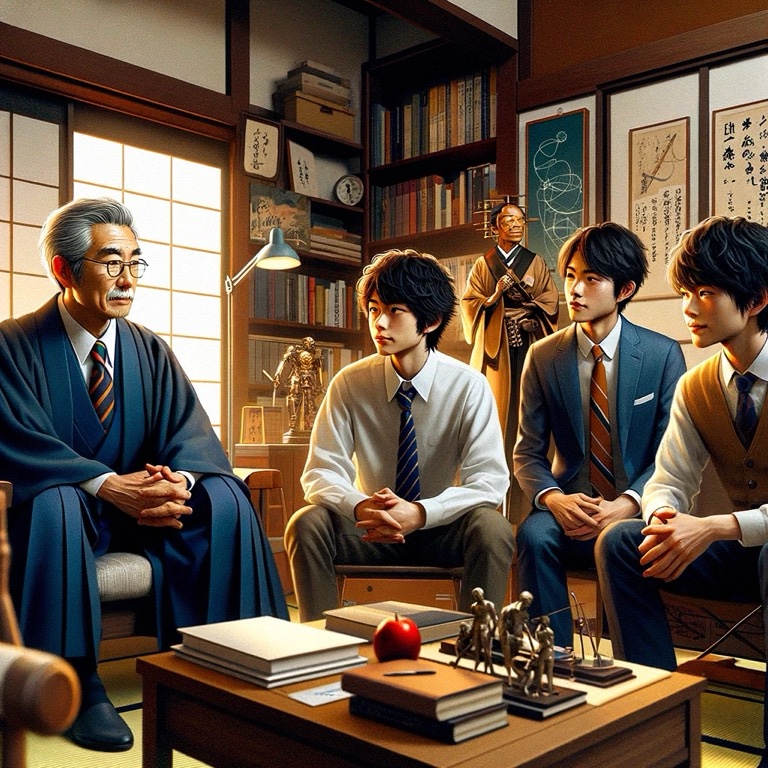
Growing up in a family deeply rooted in academic and professional rigor, I was always surrounded by a world of logic and reasoning. My father, a lawyer in Japan, exemplifies precision and analytical thinking. My younger brother, continuing the tradition, serves as an Assistant Professor in Physics at The University of Tokyo. In our household, discussions were often laden with principles and theories, painting a picture of a family passionately devoted to intellectual pursuits.

As a teenager, I faced the daunting challenge of charting my own course. The expectations, perhaps unspoken yet palpable, nudged me towards the prestigious corridors of The University of Tokyo. It was a path that seemed almost predestined, and I embraced it, securing my place at the university as a regular student. However, as I reflect back, I recognize that this decision, while celebrated, was not entirely in alignment with my true nature.

I’ve come to realize that a life overly governed by logic and structured reasoning is not where my heart lies. The idea of living more freely, unencumbered by the constant need to analyze and rationalize, appeals to me greatly. I discovered that I thrive in environments where personal interactions and relationships take the forefront. This realization led me to my current profession in sales—a field that is challenging, undoubtedly, but one that resonates more deeply with my personality. It’s in the human connections, the face-to-face meetings, where I find my energy and purpose.

This journey of self-discovery and acceptance has taught me a vital lesson: it’s never too late to pursue a life that brings joy and fulfillment. As I stand today, I am more committed than ever to live life on my terms, embracing the opportunities to connect, engage, and enjoy the simpler, yet profoundly beautiful aspects of our existence. My family’s legacy of logical thinking will always be a part of me, but I now know that my path is distinct, guided by the heart as much as the mind.

In embracing this truth, I look forward to a future filled with joy, spontaneity, and genuine connections. It’s a future where I live not just as a thinker, but as a feeler, an explorer, and a seeker of life’s many untold stories.

Learning Science Through Entrepreneurship: A Personal Journey

As someone who initially lacked a scientific background, I have come to believe that the only way for people like me to acquire scientific literacy is through the school of hard knocks – by investing in and running a business. This approach forces you to grapple with the basics of mathematics, such as addition and subtraction, and to learn many other concepts in a genuinely desperate and focused manner.

I can speak from experience, having spent four years as a commission-based salesman. This job shares many similarities with being a self-employed entrepreneur, and it has given me profound insights. In the world of business, you are constantly faced with practical problems that require a scientific approach. Be it calculating profits, understanding market trends, or even assessing the impact of environmental factors on your business, science is at the heart of it all.

This real-world application of scientific principles has been my greatest teacher. It’s one thing to learn about mathematics or physics in a classroom; it’s quite another to apply these concepts to ensure the survival and growth of your business. Every decision must be backed by data and sound reasoning, which naturally enhances your scientific acumen.

Moreover, the stakes in a business are real. Unlike academic exercises, the consequences of your decisions have a direct impact on your livelihood. This reality creates a powerful incentive to not only understand scientific concepts but to apply them wisely. You learn to trust numbers and facts over intuition, which is a cornerstone of scientific thinking.

In conclusion, entrepreneurship is more than a path to financial independence. It’s a rigorous, unforgiving classroom where the laws of science are the teachers. It demands and develops a level of scientific literacy that is hard to attain through traditional education alone. My journey as a commission-based salesman has been a testament to this unique but effective way of acquiring scientific knowledge and acumen.

The Endless Cycle of ‘살림’: Finding Meaning in the Never-Ending Journey of Housework

The phrase “집안일은 끝이 없어요” translates to “Housework is never-ending.” This sentiment is echoed in the Korean word “살림,” which refers to the act of managing a household. It’s a concept that highlights the ongoing, cyclical nature of domestic tasks, a sentiment that anyone who has ever been responsible for a home can relate to.

In the realm of domestic life, the phrase “사람 사는 이상 살림은 끝이 없네오” carries a deep truth: “As long as there are people living, housework is never done.” This saying encapsulates the essence of household management, a process that is perpetual and ever-evolving.

The truth in these Korean phrases is universal. Housework, or ‘살림,’ is an endless cycle. It’s not just about cleaning or organizing; it’s about creating and maintaining a space where life unfolds, where memories are made and where we find comfort and safety. From the daily dishes to the seasonal deep cleaning, every task contributes to the making of a home.

What makes ‘살림’ so unique is its recognition of the value in these mundane tasks. In many cultures, housework is often undervalued, seen as a necessary but unimportant part of life. However, in the spirit of ‘살림,’ there is an acknowledgment of the importance of these tasks in creating a harmonious living environment.

The never-ending nature of housework is not a burden but a continuous process of renewal and care. It’s a reminder that our living spaces are dynamic, evolving with our needs and the rhythms of our lives. In doing housework, we’re not just maintaining cleanliness or order; we’re actively participating in the creation and preservation of our personal and familial sanctuaries.

Moreover, the concept of ‘살림’ extends beyond the physical tasks. It encompasses the emotional and psychological aspects of caring for a home and its inhabitants. It’s about creating a nurturing environment, one that supports the well-being and growth of everyone who lives there.

In embracing ‘살림,’ we learn to find joy and meaning in the ordinary, to see the beauty in the everyday, and to appreciate the constant, quiet acts of love and care that turn a house into a home. It’s a journey of endless tasks, yes, but also one of endless rewards. As we engage in this never-ending cycle of care, we’re not just upkeeping a physical space; we’re cultivating a haven of comfort, love, and belonging.

Finding Comfort in the Midst of a Cold

As the seasons change, many of us find ourselves grappling with the all-too-familiar symptoms of a cold. The lethargy, the chills that seem to dance across our skin with each step, are experiences many can relate to. I recently found myself in the midst of such a bout, feeling drained and weighed down by the discomfort.

Yet, there’s a certain beauty in the way our bodies signal us to slow down, to take a moment and care for ourselves. It’s a reminder of the delicate balance of health and how swiftly it can tip. In these moments, I find solace in the simplest acts of self-care – a narrative I believe many of us share.

Wrapped in the warmth of cozy clothing, I sought relief and found it in the form of an antipyretic. It’s fascinating how small actions, like donning a warm sweater or sipping a hot beverage, can bring considerable comfort. As the medicine took effect, I felt a gradual easing of symptoms, a gentle reminder of the resilience and adaptability of our bodies.

This experience, while momentarily unpleasant, brought with it a renewed appreciation for health and wellbeing. It reminded me of the importance of listening to our bodies and responding with kindness. In our fast-paced world, we often overlook the need for rest, but it is in these quiet moments of recovery that we are reminded of the fundamental need to nurture ourselves.

Moreover, it highlights the shared human experience. We’ve all been under the weather at some point, and there’s a sense of communal understanding in that. It connects us in our vulnerabilities and our pursuit of comfort and healing.

As I reflect on this brief journey through illness and recovery, I am reminded of the power of simple remedies and the warmth of self-care. It’s a testament to the strength within us and the unspoken bond we share in our collective experiences of health and healing.

In conclusion, while a cold is an inconvenience, it’s also an opportunity to pause, to care for ourselves, and to connect with others through our shared experiences. It’s a gentle reminder that sometimes, the best medicine is a warm sweater, a quiet moment, and a cup of something soothing.

Savoring 해장라면: A Culinary Antidote to Hangovers

Amidst the vast tapestry of Korean cuisine, there’s a dish that stands out not only for its robust flavors but also for its reputed medicinal properties — 해장라면, or hangover ramen. This isn’t your ordinary packet of instant noodles; it’s a cultural experience, a soothing balm after a night of revelry.

The Birth of a Hangover Cure

The genesis of 해장라면 lies in Korea’s vibrant drinking culture. With social gatherings often accompanied by rounds of soju, a need for a morning-after remedy became culinary priority. Enter 해장라면: a spicy noodle soup with a depth of flavor that promises to revive even the weariest of souls.

Anatomy of 해장라면

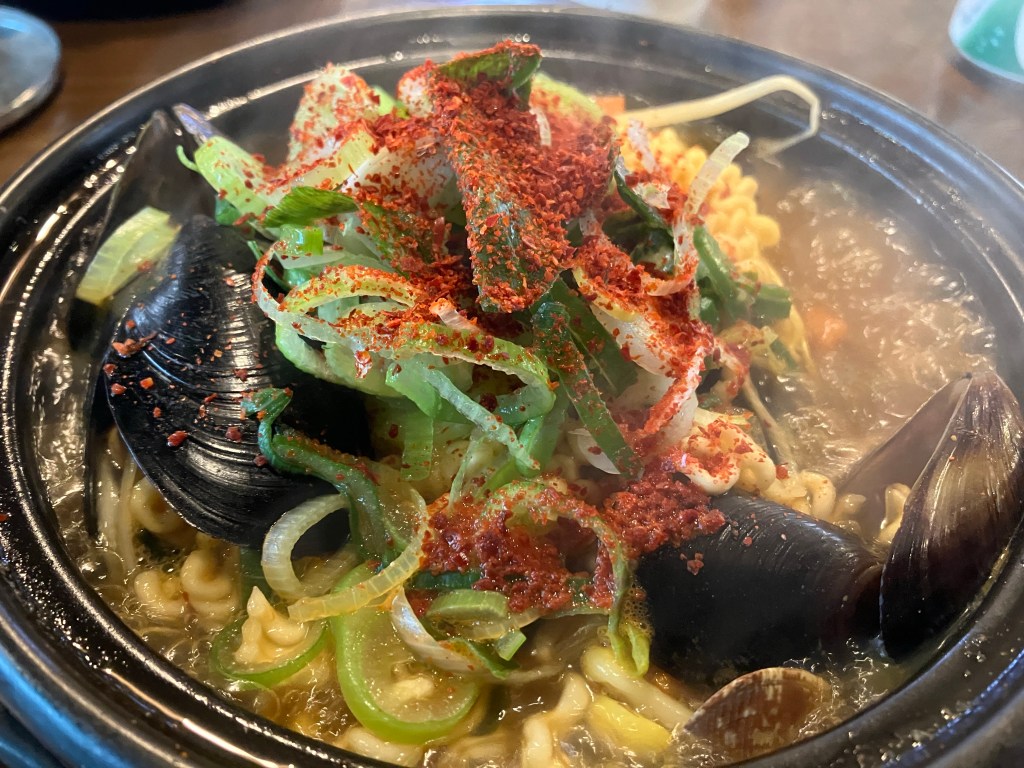
At first glance, 해장라면 might seem like an ordinary bowl of noodle soup. But dive in, and you’ll discover a rich, spicy broth that’s simmered to perfection, embracing a tangle of springy noodles. Each bowl is an adventure, often adorned with an assortment of ingredients like green onions, seaweed, and succulent pieces of meat or seafood — commonly shellfish. It’s the generous sprinkle of red chili flakes that sets the stage for the magic to happen, invigorating the senses and kick-starting the metabolism.

A Personal Encounter

Just yesterday, I found myself facing a steaming bowl of this culinary marvel. The first spoonful was a revelation — a complex layering of flavors danced across my palate. The noodles, each strand perfectly coated with the fiery broth, were both comforting and exhilarating. The shellfish added not just a touch of the ocean but also an elegance to the humble bowl of noodles.

More Than Just a Meal

What truly sets 해장라면 apart is its ability to not just feed but heal. There’s a certain solace in the ritual of eating it, a momentary pause from the hustle of life. It’s no wonder that it’s a popular choice for lunch, providing a hearty midday replenishment.

Final Thoughts

As the last spoonful of broth was sipped, and the flavors lingered, there was a realization that 해장라면 isn’t just food; it’s a testament to Korea’s love for good food and good health. It’s a dish that tells a story — one of culture, tradition, and the simple joy of a meal that can make everything feel just right.

In the end, 해장라면 is more than a hangover cure; it’s a reminder that sometimes, the simplest dishes can bring the most comfort and joy.

The Fascinating Science Behind Why We Find Babies Adorable

Have you ever wondered why almost everyone seems to find babies so irresistibly cute? It turns out, this universal ‘aww’ factor is more than just a social construct – it’s deeply rooted in our biology. In this essay, we’ll explore the intriguing science behind why we are programmed to find babies adorable.

The Genetic Vehicle: Understanding Our Biological Wiring

The fundamental concept to grasp here is that all living organisms are, in essence, vehicles for their genes. The primary purpose of these vehicles is to ensure the survival and propagation of the genes they carry. This concept, initially popularized by renowned biologist Richard Dawkins, provides a framework for understanding a wide range of biological phenomena, including our topic at hand.

The Evolution of Affection: Why We Love Baby Faces

In the grand scheme of evolution, mammals, including humans, have developed a predisposition to care for and protect their young. This is not a random occurrence but rather a result of evolutionary pressures. Offspring, particularly in their most vulnerable early stages, require significant care and protection to survive and eventually pass on their genes.

The features of a baby – big eyes, round face, small nose, etc., trigger an innate response in adults, not just parents, to provide care and affection. This response is not just emotional; it involves a complex interplay of neurochemical reactions in the brain. When we see a baby, our brain releases oxytocin, often called the ‘love hormone’, which plays a crucial role in bonding and attachment.

From Science to Sentiment: Translating Biology into Emotion

When we translate this scientific understanding into everyday language, the phrase “babies are cute” takes on a new depth. This simple statement encapsulates a profound biological imperative: the instinct to nurture and protect our future generations. It’s a sentiment that transcends cultural boundaries, hinting at a shared, evolutionary heritage.

The Broader Implications: More Than Just a Cute Face

This understanding also sheds light on broader aspects of human behavior and societal norms. The universal appeal of baby-like features extends beyond human infants to the young of other species and even inanimate objects, influencing everything from the pets we choose to the design of cartoon characters.

Furthermore, this biological perspective can help explain why neglect or harm towards infants evokes such a strong societal and emotional response. It’s not just a cultural taboo; it’s a violation of a deep-seated biological norm.

In Conclusion: A Blend of Biology and Emotion

In conclusion, the phrase “babies are cute” is more than just an expression of sentiment. It’s a reflection of a complex biological reality. Our perception of cuteness, especially in babies, is not just a social construct, but a critical component of our evolutionary success. It’s a fascinating blend of biology and emotion, highlighting the intricate ways in which our genetic makeup shapes our interactions with the world and with each other. The next time you find yourself cooing over a baby, remember, it’s not just your heart at work, but millions of years of evolutionary design!

The Buddhist Perspective on Pain: Ancient Wisdom in Modern Times

Introduction:
In a world where pain and suffering are inevitable aspects of the human experience, the Buddhist philosophy offers a profound understanding that resonates even in modern times. The notion, “We feel pain because we have the capacity to sense,” is not only a testament to the depth of ancient Buddhist teachings but also aligns remarkably with contemporary scientific understanding.

The Core Buddhist Insight:
At the heart of Buddhism lies the teaching that suffering stems from our sensory experiences. This ancient wisdom, dating back over two thousand years, delves deep into the human condition. It suggests that our physical and mental anguish is primarily due to the workings of our nervous system, which perceives and processes stimuli as pain.

Modern Scientific Correlation:
Modern medicine and neurology echo this sentiment. They tell us that pain, both physical and psychological, arises when our nerve endings are stimulated, sending signals to the brain. This intricate process of perception and reaction forms the basis of how we experience pain. The alignment between this scientific explanation and the Buddhist perspective is a striking example of how ancient wisdom prefigured modern understanding.

The Timelessness of Buddhist Teachings:
The fact that individuals over two millennia ago contemplated and taught about such complex mental phenomena is nothing short of remarkable. Their insights into the nature of suffering and the human psyche were not mere religious doctrines but were grounded in keen observations of human life. These teachings have endured through the ages, offering guidance and solace to countless individuals.

Practical Applications in Contemporary Life:
Today, the Buddhist approach to understanding pain has practical implications. In an era where mental health is gaining recognition, these teachings provide a framework for understanding our reactions to pain and suffering. They encourage mindfulness and the cultivation of a mental state where one can observe pain without being overwhelmed by it.

Conclusion:
The Buddhist saying, “We feel pain because we have the capacity to sense,” is a simple yet profound reminder of the intrinsic link between our sensory experiences and the suffering we endure. It’s a testament to the timeless relevance of Buddhist teachings, bridging the gap between ancient philosophy and modern science. As we navigate the complexities of the modern world, this wisdom from the past offers valuable insights into understanding and managing the universal experience of pain.

Gyeongseog Creature: A Convergence of History, Science Fiction, and a Stand Against Online Harassment

The landscape of television and streaming has witnessed a significant addition with the introduction of “Gyeongseog Creature,” a new Netflix drama that masterfully blends the realms of history and science fiction. Set against the backdrop of Seoul, Korea, during the Japanese colonial era, this series takes a bold step in storytelling by addressing a sensitive and powerful theme: human experiments conducted by the Japanese Army in China, which tragically involved many Korean civilians.

The narrative of “Gyeongseog Creature” does not shy away from the dark chapters of history. Instead, it confronts them head-on, weaving a tale that not only entertains but also educates and provokes thought. The drama gains its emotional and moral grounding from its heroine, portrayed by Han So-hee, whose performance has been both moving and impactful. Her recent post about the drama on her Instagram account, which can be viewed here, showcases her connection and commitment to the role.

However, the drama’s historical context has stirred up a significant response, particularly among some Japanese fans. Han So-hee has been on the receiving end of offensive messages, likely sparked by the drama’s portrayal of historical events. Her response to these messages has been nothing short of admirable – proud and logical, demonstrating a resilience and grace that speaks volumes about her character.

As a Japanese individual reflecting on this situation, there’s a twofold sense of shame. First, for the historical actions that form the backdrop of “Gyeongseog Creature,” and second, for the contemporary attacks on Han So-hee by fellow Japanese individuals. This incident serves as a stark reminder that, while contemporary generations are not directly responsible for the actions of their ancestors, there is a collective responsibility to ensure that the mistakes of the past are not repeated.

Standing with Han So-hee means more than just supporting an actress against online harassment. It symbolizes a commitment to learning from history, acknowledging wrongs, and striving for a more informed and empathetic world. “Gyeongseog Creature” is not just a drama; it’s a catalyst for important conversations about our past and how it shapes our present and future. As viewers and citizens of the world, our duty extends beyond passive watching. We must engage, reflect, and actively contribute to a society where the past is not forgotten but learned from, ensuring a more understanding and compassionate global community.

Unraveling the Intrigue of Probability: A Journey Through the Monty Hall Problem

In the fascinating world of mathematics, probability holds a special place, often challenging our intuition and offering mind-bending paradoxes. My recent exploration into this intriguing field, particularly through the lens of the Monty Hall problem, has been an enlightening journey, reshaping my understanding of how probability works.

The Monty Hall Puzzle

At first glance, the Monty Hall problem seems like a simple game show scenario: choose one of three doors, behind one of which is a prize (a car) and behind the others, something far less desirable (goats). After you make your choice, the host, Monty Hall, opens one of the other two doors, revealing a goat. You’re then given a chance to stick with your original choice or switch to the remaining unopened door. The question is: what’s your best strategy for winning the car?

Intuition vs. Probability

My initial thought, like many, was that switching or staying wouldn’t make a difference—the odds should seemingly be 50/50. However, delving deeper into the problem reveals a counterintuitive twist: switching doors actually doubles your chances of winning, from 1/3 to 2/3. This revelation was both surprising and challenging to grasp.

The Role of the Host

The key lies in understanding the host’s role. Unlike a random chance event, Monty’s action of revealing a goat is a deliberate, informed choice, which drastically alters the probabilities. If you initially pick a door with a goat (a 2/3 chance), Monty’s action of revealing the other goat means the only remaining door must have the car. Thus, switching turns a more likely wrong first guess into a right second guess.

Embracing the Counterintuitive

Accepting this solution required a shift in my perspective. The Monty Hall problem illustrates a profound principle in probability: our intuition is not always a reliable guide in probabilistic scenarios. The beauty of this problem lies in its ability to succinctly demonstrate how probability can defy our common sense.

Broader Implications in Probability

This exploration opened the door (pun intended) to other fascinating probability concepts like the Birthday Paradox, Benford’s Law, the Infinite Monkey Theorem, and the Gambler’s Fallacy. Each of these concepts, much like the Monty Hall problem, reveals the unexpected and often non-intuitive nature of probability, challenging our perceptions and encouraging a deeper understanding of the world around us.

Conclusion

Diving into the Monty Hall problem was more than just a mathematical exercise; it was a journey into the heart of probability theory, revealing how our intuitions can mislead us and the importance of critical thinking. As I continue to explore the vast and intriguing world of mathematics, I am reminded of the power and elegance of probability, a field that continually offers new insights and surprises.