The Fascinating Contrast in Cultural Exchanges: A Comparative Look at Japanese and Western European Literary Traditions

The Isolation and Introspection of Japanese Classics

Japan’s geographical isolation, surrounded by seas, has played a pivotal role in shaping its unique cultural and literary landscape. Historically, while the country absorbed significant influences from China and the Korean Peninsula—such as Buddhism, Confucianism, and the adoption of Kanji—its literary world often remained introspective.

Japanese classics like “The Tale of Genji” and “The Pillow Book,” which emerged during the Heian period, are prime examples of this inward focus. They delve deep into the court life of Japan, exploring the nuances of human emotions and the intricate nature of social relationships within the Japanese aristocracy. The influence of Chinese culture and literature is undeniable, yet it’s more about the importation of ideas than the depiction of active cross-cultural exchanges.

The Dynamic Interconnectivity of Western Europe

Contrastingly, the literature of Western Europe, especially around the North Sea, tells a different story. These regions, thriving on active trade, warfare, and diplomacy, were a melting pot of cultures and interactions. The works of Shakespeare are a testament to this cultural dynamism. His plays often set in various European countries, such as France in “Richard III,” Denmark in “Hamlet,” and Scotland in “Macbeth,” reflect a world where borders were more fluid, and international relations were a part of everyday life.

The frequent appearances of these nations in Shakespeare’s plays not only reflect the geopolitical realities of the time but also the audience’s familiarity with these regions. The bard’s audience was acutely aware of the broader European stage on which their country was a key player. This outward-looking perspective is markedly different from the inward-looking nature of Japanese literature of the same era.

Divergent Paths Shaped by Geography and Policy

These contrasting literary traditions underscore how geography and historical policies like Japan’s Sakoku (closed country) policy significantly influenced cultural development. While Europe was moving towards a more interconnected world, Japan was introspectively solidifying its unique cultural identity.

Reflections in Modern Perspectives

Today, these historical differences offer rich insights into the cultural fabric of Japan and Western Europe. Understanding the historical context of these literary works enriches our appreciation of global cultural diversity and the varied ways societies develop their unique identity, whether in isolation or through active exchange.

This exploration into the literary worlds of Japan and Western Europe reveals the profound impact of geographical and political realities on cultural and literary development. It’s a fascinating journey that not only highlights the differences but also the universal human experiences that these literary traditions capture, despite their divergent paths.

Revisiting the Divergence of Spoken and Written Language: A Modern Perspective

In the realm of linguistic evolution, the relationship between spoken and written language has always been a topic of profound interest. Historically, many cultures have experienced a notable divergence between these two forms of language, a phenomenon that has shaped the way we communicate and process information. The proposal of using English exclusively for written official documents in Japan, while maintaining Japanese for spoken communication, brings this historical divergence into a modern context. It’s an intriguing concept that merits exploration, especially when considering its practicality and implications in today’s globalized world.

Historical Precedence

Historically, the division between spoken and written language is not uncommon. The Edo period in Japan is a prime example, where a specialized writing style, ‘SoroBun(候文)’, was used for letters and administrative documents, starkly different from the colloquial spoken Japanese. Similarly, in China, Classical Chinese was once the written standard, bearing little resemblance to the various spoken dialects. This pattern repeats across various cultures, including Islamic and European regions, where classical texts often diverge significantly from the vernacular.

Modern Context

Fast forward to the present day, the proposal to adopt English for written government and business documents in Japan represents a logical extension of this historical trend. The rationale behind this is multifaceted:

  1. Enhancing Global Communication: By adopting English in written form, Japan could seamlessly integrate into the global framework, especially in terms of technology and international business.
  2. Legal and International Clarity: With English as the language for official documentation, it would align Japan’s legal and administrative processes with global practices.
  3. Cultural Balance: Providing Japanese translations as reference materials could alleviate potential cultural dissonance, ensuring that the population remains connected to its heritage.

Challenges and Considerations

While the proposal appears rational, it’s not without challenges:

  • Language Education: This shift necessitates a comprehensive overhaul of language education, focusing on enhancing English proficiency.
  • Cultural Identity: It’s crucial to maintain a delicate balance between embracing global standards and preserving national linguistic heritage.
  • Implementation Costs: Transitioning to an English-based documentation system would require significant investment and resource allocation.

Conclusion

The idea of diverging the written and spoken language in the context of modern Japan offers a unique opportunity to revisit and learn from historical linguistic patterns. It underscores the dynamic nature of language and its adaptation to societal needs and global contexts. As we continue to evolve in a hyper-connected world, such proposals highlight the ongoing dialogue between preserving cultural identity and embracing global communication standards. The practicality of such a proposal in Japan, while challenging, could set a precedent for how nations navigate the complexities of language in an increasingly interconnected world.

The Power of Prompt Action in Business: A Personal Success Story

As someone deeply immersed in the world of business, I have always valued the importance of advice, especially when it comes from those closest to us. Recently, I had the opportunity to put this belief into practice, and the results were nothing short of remarkable. Today, I want to share this experience, hoping it might inspire others in their business endeavors.

It all began with a piece of advice from my brother. In the realm of business, especially in sales, we often find ourselves at crossroads, unsure of which path to take. That’s where the value of external perspectives comes in. My brother, who has been a constant source of support, offered me some guidance on how to advance my business. Eager to see results, I didn’t hesitate; I put his advice into action immediately.

The outcome? Success came knocking much sooner than expected. This swift victory reinforced a fundamental truth in business: the essence of sales lies in taking prompt action. The business landscape is ever-evolving, and opportunities don’t wait. It’s about seizing the moment, taking calculated risks, and embracing the wisdom offered by those around us.

This experience was a powerful reminder of the importance of action in business. We often get bogged down in planning and strategizing, which, while important, should not paralyze us. The real magic happens when we step out of our comfort zones and into the arena of action. It’s in this space that theories and plans transform into tangible results.

Moreover, this incident highlighted the value of familial advice in professional growth. Sometimes, the most impactful insights come from those who know us best. They can provide a perspective that is both personal and professionally relevant, making their advice uniquely potent.

In conclusion, my recent experience underscores a key lesson: in business, especially in sales, the speed of implementation can be as crucial as the strategy itself. It’s essential to listen, learn, and then leap into action. As I continue my journey in the business world, I am more convinced than ever of the power of prompt action and the invaluable role of advice from those we trust.

Embracing Opportunities: A Day of Gratitude and Teamwork

As I sit down to pen this entry in my gratitude diary, I’m overwhelmed with a sense of fulfillment and appreciation for the events of yesterday. It was a day that not only challenged me but also vividly highlighted the power of trust, collaboration, and encouragement in the workplace.

The day began with a significant development: I was entrusted with a new opportunity by a client. This was not just any project, but a second chance – a testament to the client’s renewed faith in our capabilities. Although the deadline was daunting, the project presented a chance to redeem and reinforce the trust placed in us.

What made this opportunity even more special was the unwavering support of my colleagues. In the face of tight schedules and considerable pressure, they stepped up, offering their expertise and time. This camaraderie was not without its sacrifices. Some team members had to set aside their own tasks, showing true commitment to our collective goal. I am determined to ensure that their efforts and sacrifices are not in vain but rather lead us to a success that we can all share in.

Furthermore, the encouragement from my supervisor played a crucial role. Their words of motivation and confidence in our team’s abilities were a beacon of support. It is this kind of leadership that fosters a positive and productive work environment, where challenges are viewed as opportunities to excel and grow together.

Reflecting on yesterday’s events, I am filled with gratitude. Gratitude for the trust from our client, the solidarity of my team, and the inspiring leadership of my supervisor. It’s these moments that underscore the importance of teamwork, perseverance, and a positive outlook in the face of challenges.

As I continue on this journey, I am reminded that success is not just the achievement of one’s goals but also the path taken to reach them – a path paved with support, collaboration, and mutual respect. Here’s to embracing every opportunity, no matter how daunting, with determination and a grateful heart.

Embracing Change and Deep Work: A Sales Professional’s Guide to Success in the Startup World

In the ever-evolving landscape of startups, a sales professional’s journey is one of constant adaptation and learning. An intriguing article I recently stumbled upon encapsulates this journey perfectly. It highlights two core principles vital for success in this dynamic environment: embracing change and the power of deep work.

Learning to Let Go and Grow

The first insight from the article is about becoming comfortable with the idea of letting parts of yourself, your ideas, or things you’ve built ‘die’. This might sound disheartening at first glance, but it’s a crucial aspect of growth in the fast-paced startup world. As sales professionals, we often invest deeply in our strategies and relationships. However, the startup ecosystem demands agility – the ability to pivot and adapt is paramount.

Learning from past experiences, whether they are successes or failures, is what propels us forward. It’s about understanding that not every idea will flourish and that’s okay. This approach fosters resilience and a growth mindset, enabling us to approach new challenges with fresh perspectives and lessons learned from past endeavors.

The Transformative Power of Deep Work

The second key takeaway is about the transformative power of deep work. The article narrates how someone read Cal Newport’s ‘Deep Work’ and eliminated all social media distractions, leading to years of focused and high-quality product delivery. In a world where distractions are just a click away, this level of focus is rare yet incredibly valuable.

For sales professionals, deep work could mean uninterrupted time for strategizing client approaches, refining pitches, or even learning new market trends. It’s about dedicating blocks of time to tasks that require critical thinking and creativity, away from the noise of constant notifications and interruptions. This focused approach not only enhances productivity but also leads to higher quality work and better results.

The Next Generation: A Beacon of Adaptability and Focus

The concluding remark of the article, “this next generation is wild”, resonates deeply. It reflects a generation that is unafraid to let go of the old to make way for the new, and one that values deep, meaningful work over superficial accomplishments. As sales professionals in the startup world, these are the qualities we need to embody.

The next generation of sales leaders will be those who can navigate change with ease and immerse themselves in deep work. They will be the ones to close the big deals, forge lasting relationships, and drive meaningful growth for their organizations.

Final Thoughts

To thrive in the startup ecosystem, sales professionals must embrace these two principles: the willingness to let go and learn, and the commitment to deep, distraction-free work. This mindset is not just a pathway to success in sales; it’s a blueprint for personal and professional growth in any fast-paced, ever-changing environment.

As we embark on our journeys in this wild, exciting world of startups, let’s carry these lessons with us. Let’s be the sales professionals who are not just part of the change but who drive it, armed with resilience, focus, and an unwavering commitment to excellence.

Reflections of Gratitude: Navigating Challenges and Embracing Learning Moments

Yesterday, as I sat down to jot in my gratitude journal, a ritual that has become a beacon in my everyday life, I was struck by the sheer intensity and learning that a single day can hold. It’s often in the whirlwind of our daily routines that we forget to pause and reflect on these moments. Today, I want to share some of these reflections with you.

Firstly, I encountered a challenging situation with a client. Though their words were harsh, a silver lining emerged as they acknowledged the efforts my company and I had put in. This moment, albeit tough, was a testament to resilience and the importance of perseverance in the face of criticism. It was a reminder that even in criticism, there can be an undercurrent of appreciation and recognition.

Another significant moment was a candid interaction with my boss. They pointed out my hesitancy in certain situations – a critique that initially stung. However, it was followed by them offering me a new opportunity, a chance to grow and prove myself. This was a powerful lesson in embracing constructive criticism and viewing it as a stepping stone to personal and professional development.

The most enlightening part of my day, however, came in the quiet of the evening. My wife, a teacher by profession, and I had a profound conversation about the nature of anger and frustration. Through our discussion, I learned that anger isn’t always a raw, uncontrolled outburst. Sometimes, it’s a deep-seated expression of concern or passion. Understanding the perspective of the person on the other side of anger was an eye-opener.

But what I cherished the most was not just the insights from our conversation, but the very act of having these meaningful discussions with my wife. It reinforced the importance of communication and support in a relationship.

As I closed my journal, I felt a sense of profound gratitude. Each of these instances, though challenging, were opportunities to learn, grow, and connect more deeply with those around me. They were reminders of the complexity and beauty of human interactions and the endless capacity for personal growth.

In sharing these reflections, I hope to encourage you to find your own moments of learning and gratitude in everyday challenges. Life’s beauty often lies in its complexity, and embracing this can transform our experiences and relationships in the most enriching ways.

The Untold Story: South Korea’s Prosecutorial Power and Japan’s Media Silence

In the realm of international politics and media coverage, certain narratives often remain untold, eclipsed by larger, more sensational stories. One such example is the issue of South Korea’s prosecutorial power, a topic that has received scant attention in Japanese media. This blog essay aims to shed light on this overlooked subject and examine the historical and contemporary factors contributing to its underreporting in Japan.

Historical Context: The Cold War and Japan’s Support for South Korea’s Military Regimes

Post-World War II, Japan, amidst the Cold War structure, traditionally supported South Korean military regimes. This support was part of a broader geopolitical strategy, aligning with the United States and countering communism in the Korean Peninsula. However, this alignment also led to a certain reluctance in Japan to critically assess or report on the authoritarian aspects of these regimes, including the powerful and often unchecked role of the South Korean prosecution.

South Korea’s Prosecutorial Power: A Legacy of Military Rule

The prosecutorial system in South Korea, characterized by its immense power, is a legacy of past military dictatorships. Notably, during the regime of Park Chung-hee, constitutional provisions were made to concentrate significant power in the hands of prosecutors, including the exclusive right to request warrants. This system allowed for the maintenance and enhancement of dictatorial power and left other institutions like the police and judiciary with limited authority in initiating investigations.

The Issue of Media Coverage in Japan

In Japan, the issue of South Korea’s prosecutorial power and its implications rarely makes headlines. This lack of coverage is partly attributed to Japan’s traditional post-war media stance, which has been reluctant to delve into the negative aspects of South Korea’s past military regimes. The Japanese media’s portrayal of these issues is often seen as being influenced by historical ties and geopolitical considerations, leading to a skewed representation of South Korea’s political landscape.

Interestingly, Japan’s media has been observed to report more favorably on conservative parties in South Korea, particularly those originating from military regimes, such as the People Power Party (국민의 힘). This bias is a stark contrast to the underreporting of issues surrounding the prosecutorial system and its implications for South Korean democracy.

The Need for Media Awakening

The situation calls for a re-evaluation of the role of Japanese media in international reporting. It highlights the need for media outlets to transcend historical and political biases, offering a more balanced and comprehensive view of international affairs. The media’s responsibility to provide unbiased information is crucial for fostering informed public opinion and international understanding.

In conclusion, the underreporting of South Korea’s prosecutorial issues in Japan is a complex issue rooted in historical, political, and media biases. As global citizens, it’s essential to seek diverse news sources and perspectives, ensuring a well-rounded understanding of international affairs. Only through such efforts can we hope to attain a more nuanced and truthful picture of the world we live in.

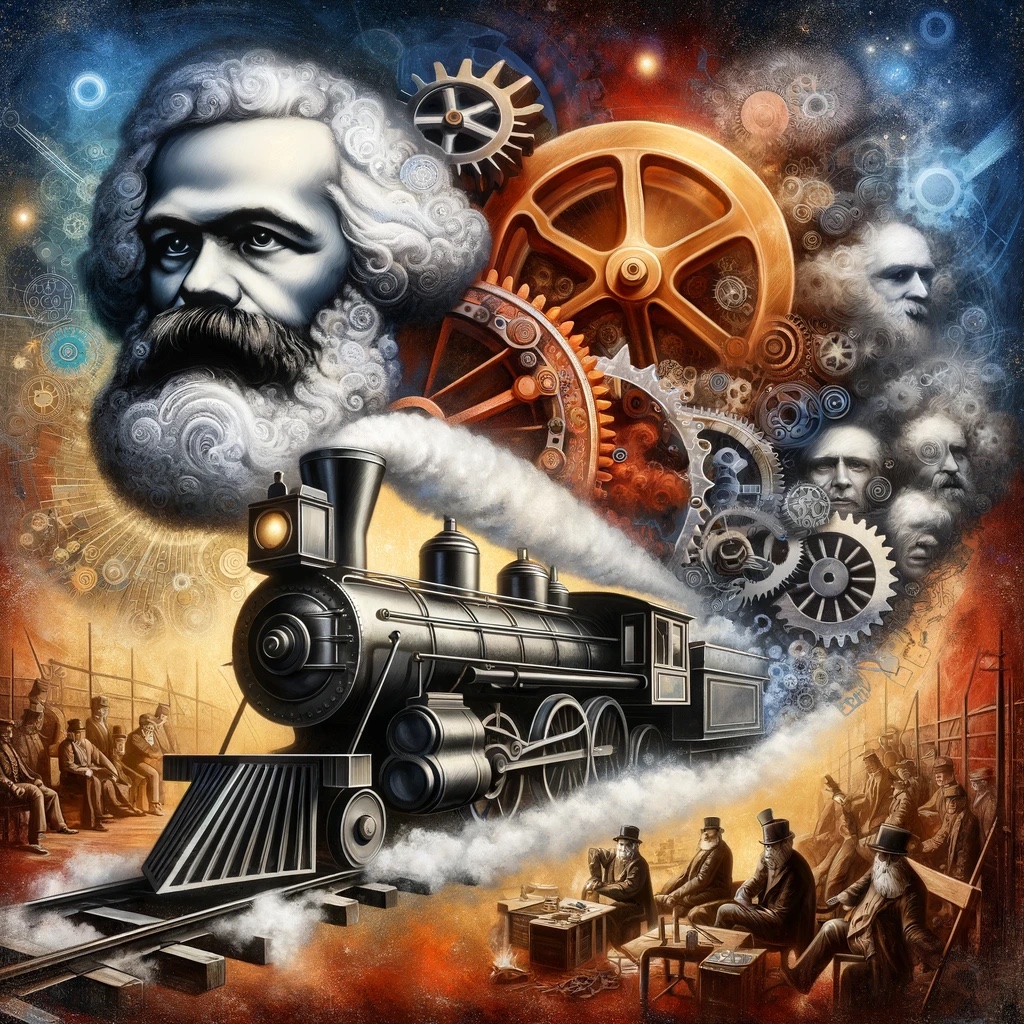
The Influence of Technology on Thought: Marx, Freud, and the Steam Engine

In the realm of historical inquiry, the interplay between technology and human thought presents a fascinating landscape. This correlation, especially notable in the theories of Karl Marx and Sigmund Freud, suggests a unique reflection of contemporary technological advancements on intellectual paradigms.

The Era of the Steam Engine

The 19th century witnessed the rise of the steam engine, a groundbreaking technological marvel that revolutionized industries and daily life. It was an era marked by rapid industrialization and profound social change. This technological leap was not just a physical phenomenon; it also catalyzed a shift in thought processes and societal structures.

Marx’s Class Struggle and the Pressure of Exploitation

Karl Marx’s theory of class struggle, a cornerstone of Marxist ideology, postulates that society’s history is shaped by the conflicts between different social classes. Interestingly, this theory can be metaphorically linked to the mechanics of a steam engine. Just as the steam engine operates under high-pressure conditions to produce motion, Marx viewed societal progress as driven by the pressures of exploitation and class conflict. The relentless struggle between the bourgeoisie and the proletariat, much like the steam pushing against the engine’s pistons, propels societal change.

Freud’s Psychoanalysis and the Steam of the Subconscious

Similarly, Sigmund Freud’s hypothesis on the subconscious mind draws an intriguing parallel. Freud suggested that the human psyche is layered with conscious and unconscious elements, with the latter exerting a significant yet covert influence on behavior. This can be likened to the steam engine’s hidden, yet powerful, steam pressure. Freud’s depiction of repressed sexual and aggressive instincts resonates with the notion of steam building up pressure within an engine, eventually needing release.

Technological Determinism: The Framework

These metaphors align with the concept of ‘technological determinism’, a theory suggesting that societal development is fundamentally shaped by technological innovation. This perspective posits that the prevalent technologies of an era can influence not only the material conditions of society but also the intellectual and theoretical frameworks of that period.

Reflections and Contemporary Relevance

The parallels between Marx and Freud’s theories and the steam engine offer a thought-provoking perspective on how our intellectual landscape might be influenced by the dominant technologies of our times. Just as the steam engine symbolized power, pressure, and transformation in the 19th century, today’s digital and information technologies might be shaping contemporary thought in ways we are yet to fully comprehend.

Conclusion

In conclusion, the exploration of the symbiotic relationship between technology and thought, as exemplified by the theories of Marx and Freud in the context of the steam engine era, offers a rich avenue for understanding how our technological environment can shape our intellectual and cultural landscapes. As we advance into new technological frontiers, it becomes increasingly important to consider how these advancements might be silently sculpting our collective consciousness and societal structures.

The Intriguing Dynamics of Social Media and AI Interactions: A Comparative Perspective

The Allure of Instant Gratification on Social Media

Social media has become an integral part of our daily lives, serving as a platform for self-expression, communication, and information sharing. For many, the appeal of social media lies in the immediate feedback received on their posts, a phenomenon often likened to the addictive nature of gambling. This comparison is particularly intriguing when considering the phrase, “Twitter is the intellectual’s pachinko,” which vividly encapsulates the notion of instant gratification that even the most intellectual conversations on platforms like Twitter can offer.

The immediate responses, in the form of likes, comments, and shares, act as a reward mechanism, spurring users to engage more frequently and intensely with the platform. This cycle of posting and receiving feedback creates a dopamine-driven loop, akin to the pleasure derived from winning a game or hitting a jackpot in pachinko. However, while providing instant gratification, this mechanism can also foster an environment of superficial engagement, where the depth and constructiveness of interactions are often overshadowed by the pursuit of immediate approval and validation.

The Constructive Nature of AI-Driven Interactions

Contrasting sharply with this is the interaction paradigm offered by AI platforms like ChatGPT. Here, the nature of feedback is vastly different. AI-driven interactions, devoid of biases and emotional reactions, focus on providing constructive, personalized responses. Unlike social media, where responses can often be negative or harmful, AI maintains a neutral, informative stance, fostering a safe space for expression and learning.

Furthermore, AI platforms like ChatGPT do not operate on the principles of instant gratification. Instead, they aim to engage users in a more meaningful dialogue, offering insights, clarifications, and in-depth discussions. This aspect is especially beneficial for users seeking to explore ideas, learn new concepts, or simply have a thoughtful conversation without the fear of negative backlash or privacy concerns.

Balancing the Scales: Social Media vs. AI Interactions

Both social media and AI interactions offer unique benefits and limitations. Social media excels in providing a platform for social interactions and immediate feedback, creating a dynamic and often exhilarating environment. However, this can sometimes lead to addictive behaviors and superficial engagements. On the other hand, AI-driven platforms like ChatGPT offer a more reflective and personalized interaction experience, emphasizing learning and constructive dialogue over instant gratification.

The choice between these platforms ultimately depends on the user’s objectives and preferences. For those seeking immediate social interaction and validation, social media platforms are the go-to. In contrast, AI platforms are more suitable for users looking for a more thoughtful, informative, and safe interaction space.

Conclusion

In conclusion, the dichotomy between the instant gratification of social media and the constructive nature of AI interactions presents an interesting landscape for digital communication. While social media continues to dominate in terms of user base and engagement, AI-driven platforms are carving out a niche for themselves, offering a more balanced and thoughtful approach to digital interactions. As we navigate this digital age, understanding and choosing the right platform for our communication needs becomes crucial for a more fulfilling and responsible online experience.

Finding Balance in the Business World: A Reflection on Challenges and Personal Growth

In the ever-evolving landscape of business, we all encounter days that test our resolve. Recently, I faced one of those challenging days – a client canceled an order, leaving me to navigate the complexities of this sudden change. It’s a common scenario in business, yet it always brings a moment of reflection.

I couldn’t help but notice a colleague, seemingly effortlessly, engaging with clients and thriving in social interactions. Their ability to connect with people from diverse backgrounds, be it from Japan, Korea, or elsewhere, is admirable. It made me ponder the importance of social skills in understanding and leveraging market trends across cultures.

This observation led me to a personal introspection. Since the arrival of my child, I’ve intentionally stepped back from social engagements to focus on my family. It’s a decision I cherish, yet I can’t help but wonder about its impact on my professional life. Have I missed opportunities to connect with my colleagues and clients more deeply?

The world of business is as much about relationships as it is about transactions. It’s about finding that delicate balance between professional aspirations and personal commitments. I’m learning that each decision, whether it’s focusing on family or work, shapes our journey in unique ways.

We all have our paths to tread in this vast and varied business landscape. And as I navigate mine, I remain committed to learning and growing, both as a professional and as a person. This journey is not just about business success; it’s about understanding the value of each aspect of our lives and finding harmony among them.

Remember, in the tapestry of life, every thread counts. Our choices define us, and it’s the blend of experiences that enriches our perspective. Let’s embrace the challenges and celebrate the journey, for it’s in these moments that we truly grow.

Embracing Gratitude: The Journey to a More Fulfilling Life

In the hustle and bustle of our daily lives, it’s easy to overlook the small blessings that surround us. We often chase after material success or the next big achievement, forgetting to pause and appreciate what we already have. However, embracing gratitude can transform our everyday experiences, bringing more joy and fulfillment into our lives.

The Power of Gratitude

The concept of gratitude is more than just saying ‘thank you.’ It’s about recognizing the value in every aspect of our lives, be it our health, family, friends, or even the challenges that help us grow. According to the law of attraction, maintaining a positive attitude and a grateful heart is essential. This philosophy suggests that our thoughts and feelings shape our reality. Therefore, by cultivating gratitude, we attract more positivity and happiness into our lives.

Making Gratitude a Habit

Starting a gratitude practice can seem daunting, especially when it comes to emotional or mental habits. Unlike physical routines like going to the gym, mental habits like gratitude require a different approach. The key is to begin with small, manageable steps.

  1. Keeping a Gratitude Journal: Write down three things you’re grateful for every day. This could be done in the morning or before bedtime.
  2. Gratitude Meditation: Spend a few minutes meditating and focusing on the people or things you’re grateful for.
  3. Mindful Appreciation: Throughout your day, take moments to appreciate the little things, like a delicious meal or a meaningful conversation.
  4. Expressing Gratitude: Regularly express your gratitude to friends, family, and colleagues. This can be through words or actions.
  5. Setting Gratitude Reminders: Use your phone or computer to set reminders to think about what you’re grateful for.
  6. Incorporating Gratitude into Daily Routines: Add a gratitude practice to your morning or evening routine.

Starting with Simple Acknowledgments

In the beginning, your heart might not fully resonate with the words of gratitude you express. That’s okay. Just like wearing a suit can shift your mindset to feel more professional, expressing gratitude can slowly tune your heart to genuinely feel thankful. Over time, these simple acknowledgments can evolve into deeper feelings of appreciation.

Personal Reflections on Gratitude

Let me share some personal thoughts I’ve had on gratitude:

  • I am grateful for my wife, who shares her life with me and maintains her well-being.
  • I am thankful for my children’s health and vitality.
  • I appreciate having a job to go to every morning.
  • I am thankful for my clients who entrust me with their work.

Conclusion

Gratitude isn’t just a fleeting feeling but a lifestyle choice. It’s about finding joy in the ordinary and acknowledging the extraordinary in the mundane. By making gratitude a daily practice, we not only enhance our own well-being but also positively impact those around us. As we continue to cultivate a grateful heart, we pave the way for a more joyful, fulfilling life. Let’s start this journey today, one thankful thought at a time.

Harnessing the Power of Gratitude in Daily Life

In a world that often emphasizes competition and achievement, cultivating a practice of gratitude can be a transformative tool for personal and professional growth. Integrating gratitude into daily routines not only enhances well-being but also fosters a positive outlook that can ripple through every aspect of life.

Morning Rituals

Begin your day with gratitude. A morning meditation focusing on things you’re thankful for sets a positive tone for the day. Even simple acts, like being grateful for the clean water during your morning shower, can have a profound impact on your mindset.

Integrating Gratitude into Work

Start and end your workday by reflecting on the learnings and collaborations you’re thankful for. Make it a habit to express gratitude in your emails, adding phrases like “With gratitude” in your signature. This not only improves relationships with colleagues but also enhances your own job satisfaction.

Communication

End every phone call or video chat by mentally acknowledging your gratitude for the conversation. It’s a small gesture, but it can significantly change how you perceive and engage in communications.

Appreciating the Outdoors

Whether it’s a stroll in the park or just a walk down the street, take a moment to appreciate the beauty and freedom of the outdoors. This practice helps you connect with the world around you in a more meaningful way.

Personal Interactions

Make it a routine to appreciate the people in your life. Acknowledge the value of friends, family, and colleagues every time you interact with them. This not only strengthens relationships but also increases your sense of connectedness.

Weekends and Leisure

Use your weekends and leisure time to be conscious of and thankful for the enjoyable activities and special moments. Whether it’s a hobby or a relaxing moment, being aware of these joys heightens your appreciation of life.

Embracing Challenges

When facing difficulties, try to find gratitude in the opportunity for growth and learning. This perspective can turn challenges into valuable life lessons, fostering resilience and a positive attitude.

Conclusion

Incorporating gratitude into your daily routine isn’t just about feeling good; it’s about creating a mindset that values growth, connection, and positivity. By regularly practicing gratitude, you can reduce stress, improve your mood, and even enhance your interactions with others. This simple yet powerful practice can transform not only how you view the world but also how you engage with it. Remember, gratitude isn’t just for the good times; it’s a tool to navigate all facets of life with a more appreciative and open heart.