Childhood Games from Japan and Korea: Introducing traditional games and their significance.

As a Japanese person living in Korea, married to a wonderful Korean woman, I find myself often reflecting on the rich cultural tapestry that our twin babies, now 10 months old, are growing up in. In this blog post, I want to explore and share some of the traditional childhood games from both Japan and Korea, highlighting their significance and the beautiful blend of cultures our children are exposed to.

**Japan: The Land of Amusing Traditions**

Japanese games are not just about fun; they are steeped in history and culture. A game that stands out is ‘Kendama’. It’s a wooden toy that tests dexterity, involving a ball and string connected to a hammer-like object. The goal is to catch the ball in one of the cupped surfaces of the hammer. Kendama teaches patience and focus, values deeply ingrained in Japanese culture.

Another favorite is ‘Daruma Otoshi’, a game of skill involving a wooden block tower and a small hammer. The aim is to knock out the lower blocks without toppling the tower, symbolizing perseverance and precision.

**Korea: A Blend of Joy and Learning**

In Korea, traditional games are a delightful mix of physical activity and strategic thinking. ‘Yut Nori’, a board game played during the Lunar New Year, is a family favorite. It involves throwing sticks and moving markers across a board, teaching children about strategy and the importance of family bonding.

Another popular game is ‘Jegichagi’, similar to the Western game of Hacky Sack. It involves kicking a jegi (a shuttlecock-like object) and keeping it in the air as long as possible. This game is not only fun but also promotes physical fitness and agility.

**Bridging Cultures Through Play**

As our babies grow, I look forward to introducing them to these games. It’s a way for them to connect with their heritage from both Japan and Korea. These games are more than just play; they are stories, lessons, and traditions passed down through generations.

In a world that’s rapidly modernizing, it’s vital to keep these traditional games alive as they offer a unique window into our respective cultures. They are a way for our children to understand and appreciate where they come from, giving them a sense of identity and belonging.

I believe that by exposing them to the richness of both Japanese and Korean traditional games, we are not only preserving our heritage but also fostering a deep respect and understanding for each other’s cultures in our family.

In conclusion, as we navigate this beautiful journey of raising multicultural children, I am excited about the many ways we can use play to teach them about their heritage. It’s through these simple yet profound traditional games that they’ll learn about the values, history, and culture of Japan and Korea, creating a unique blend of identities that they can proudly carry forward.

The Role of Civic Engagement in Democracy: Reflections from a Japanese Resident in South Korea

Introduction:
As a Japanese living in South Korea, I’ve had the unique opportunity to observe and compare the democratic values and practices of two different societies. While reflecting on these experiences, I’ve come to appreciate a particular aspect of the Korean character, which I believe plays a significant role in their robust democratic culture.

The Korean Spirit of ‘오지랖’ (Ojirap):
In Korean, there’s a term called “오지랖” (Ojirap), loosely translated as being nosy or meddling in others’ affairs. While it can have negative connotations, I’ve observed a positive aspect of this trait – the tendency to be deeply involved in community and societal matters. This characteristic, often seen as being overly concerned about others’ business, can also be interpreted as a form of active civic engagement and a deep sense of responsibility towards one’s community and society.

Democracy in South Korea:
South Korea’s journey to democracy, especially the overthrow of military dictatorship, is still a fresh memory in the nation’s collective consciousness. This history has fostered a society where people are genuinely invested in democratic processes and values. The public’s active participation in political and social matters, a manifestation of ‘Ojirap,’ seems to be a cornerstone of this vibrant democracy.

Contrast with Japan’s ‘Shelf Democracy’:
Reflecting on my homeland, Japan, I sometimes view its adoption of democracy as a ‘shelf democracy,’ one that was more or less handed down by the occupying American forces post-World War II. While Japan certainly practices democratic principles, the fervor and grassroots involvement seen in South Korea appear less pronounced.

The Importance of Civic Engagement:
This comparison has led me to ponder the importance of civic engagement in a democracy. In societies where people believe politics is someone else’s business, democratic values may not take root as deeply. South Korea’s democratic resilience, possibly strengthened by this ‘Ojirap’ trait, suggests that active public involvement is crucial for the health of a democracy.

Conclusion:
Living in South Korea has offered me a new perspective on the role citizens play in nurturing and protecting democratic values. The Korean approach, marked by a keen interest in communal and national affairs, perhaps even bordering on ‘meddlesomeness,’ contributes significantly to their robust democracy. It’s a lesson that many societies, including Japan, can learn from – the importance of being invested, concerned, and involved in the workings of one’s nation.

Call to Action:
I invite readers to reflect on their own society’s approach to democracy. How does civic engagement manifest in your community, and what can we learn from other cultures in strengthening our democratic practices? Share your thoughts and experiences in the comments below. Let’s engage in a meaningful dialogue on the vital role of civic participation in preserving and enriching our democratic institutions.

The Silent Decline: Reflecting on the Global Presence of Japanese Consumer Goods

In a casual conversation with a friend in South Korea, an intriguing observation was made: “Before I realized it, it’s been almost a decade since I stopped using Japanese products.” This statement sparked a moment of reflection for me. Indeed, it seems that Japanese consumer goods have gradually lost their prominence in the international market, a change that has occurred almost imperceptibly.

This shift is not widely acknowledged or felt among ordinary consumers in Japan. There’s a subtle disconnect between the perception of Japan’s global market influence and the actual scenario. To convey this gradual but significant change to a Japanese audience, I recently found a relatable comparison.

Consider the rise and fall of Hong Kong cinema. In the 1980s and 90s, movies from Hong Kong, featuring stars like Jackie Chan, achieved blockbuster status worldwide, including in Japan. These films garnered a massive fanbase, captivating audiences with their unique blend of action, humor, and drama. However, if one were to ask a Japanese person when they last watched a Hong Kong movie, many would struggle to remember. This serves as a powerful metaphor for the current state of Japanese consumer goods.

Like Hong Kong cinema, which once enjoyed worldwide acclaim but has now faded into the background, Japanese products have similarly receded from the global consumer’s view. This unnoticed fading away reflects a broader narrative of rise and decline, a cycle that is both poignant and inevitable in the global market.

Living overseas, I feel a deep sense of nostalgia and contemplation over this shift. It’s a reminder of the dynamic nature of global consumer trends and Japan’s evolving place within it. For Japanese manufacturers and marketers, this could be a wake-up call to reassess and innovate to regain relevance in the ever-changing global market.

As we look to the future, it’s essential for Japan to reflect on these changes and adapt. The world market is constantly evolving, and staying relevant requires not just quality and innovation, but also an understanding of global consumer behavior and trends. The story of Japanese consumer goods, much like the once-thriving era of Hong Kong cinema, serves as a testament to the fluidity of international prominence and influence.

Contrasting Perspectives on Transportation Delays: Japan and South Korea

In a globalized world, understanding the nuances of different cultures becomes increasingly important, especially when it comes to perceptions of societal issues. A striking example of this can be found in the contrasting attitudes towards transportation delays in Japan and South Korea.

In Japan, train delays are often due to ‘human accidents,’ a euphemism for suicides on the train tracks. This phenomenon is alarmingly common, highlighting a grave societal issue. The term ‘human accident’ itself is a softened expression, perhaps reflecting a societal discomfort in confronting the stark reality of these tragedies.

On the other hand, in South Korea, frequent demonstrations and strikes, which can cause similar transportation delays, stem from a very different place. These events are expressions of rights and demands for a better quality of life. They represent a society actively engaging in discourse and standing up for its beliefs and needs.

From the perspective of a Japanese observer working for an American company in South Korea, these differences are stark. While both countries experience disruptions in public transportation, the underlying causes are diametrically opposed. In South Korea, the disruptions are a byproduct of a vibrant, albeit sometimes inconvenient, democratic process. In Japan, the delays are a somber reminder of the personal struggles many individuals face, often in silence.

This observer notes a profound reflection: In South Korea, transportation is delayed because people are fighting to live better, while in Japan, it’s delayed due to some choosing death as their escape. This contrast paints a telling picture of the societal health and priorities in each country.

The Japanese tendency to look down upon the Korean social practices of protesting and striking for rights might stem from a misunderstanding of their purpose and significance. On the contrary, these demonstrations in South Korea represent a collective effort towards societal improvement and should perhaps be viewed with respect.

In conclusion, the way societies deal with transportation delays – whether in South Korea through public demonstrations or in Japan through the more somber issue of ‘human accidents’ – reflects deeper cultural and societal values. It’s a reminder that behind every inconvenience, there’s a story, a set of values, and a context that deserves understanding and empathy.

A Serene Family Escape: Our Day at Café Astana

Nestled in the bustling city of Hwaseong, Café Astana stands as a beacon of serenity and delight for families seeking a reprieve from the hectic life of Seoul. Just an hour’s drive away, this café is a paradise that caters to all – a perfect blend of comfort for adults and adventure for the little ones.

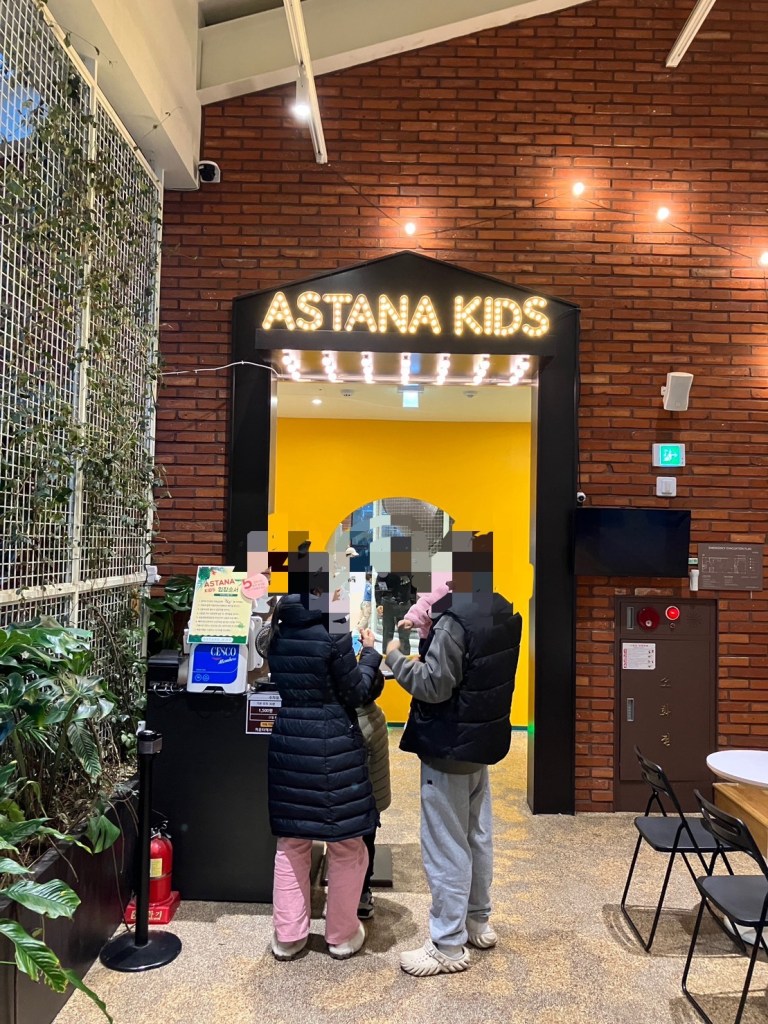
As we entered the café, we were greeted by the warmth of brick walls adorned with cheerful lights, spelling out “ASTANA KIDS,” a promise of the family-friendly environment within. The first photograph captures this entrance, inviting parents and children to a space where joy and laughter echo.

The spacious interior is a breath of fresh air, boasting modern industrial vibes intertwined with a touch of nature, as seen in the second image. Here, amidst the chatter and clinking of coffee cups, one can find solace in the company of lush green plants that adorn the space.

Our twins, merely 10 months old, found their slice of heaven in the kids’ zone – a safe and vibrant area where they could crawl, slide, and bounce to their hearts’ content. The joy of their first encounter with a slide and trampoline was a sight to behold, as shown in the third photo, where the play area’s thoughtful design promises fun and safety in equal measure.

The fourth image showcases the café’s culinary heart, where glass cases present an array of delectable treats. The offerings range from hearty meals that satiate the appetite to aromatic coffee that revives the spirit – each prepared with meticulous care and served with a smile.

Café Astana is not just a place to eat and play; it’s a destination where memories are made. Where babies giggle at the sight of new friends and parents unwind, knowing their little ones are in a realm of safe exploration. It’s a café that understands the essence of family time.

We left Café Astana with full bellies, light hearts, and a desire to return. For those interested in visiting this enchanting spot, further details can be found at Café Astana. And for those afar, may these photographs transport you to our day of tranquility and toddler giggles, reminding us all of the simple pleasures that family life has to offer.

아스타나키즈
경기 화성시 효행로 1203-8 카페아스타나
https://naver.me/FQ5wdxvx

Navigating the Emotional Landscape of Social Media: Lessons from Thomas Edison

Introduction:
In the digital era, social media (SNS) has become an integral part of our lives, both personally and professionally. As a salesperson, I’ve come to realize that SNS is not just a platform for sharing information but a powerful tool for conveying and influencing emotions. Recently, I’ve been contemplating how to manage the negative emotions that can arise from interactions on these platforms and draw inspiration from an unlikely source: Thomas Edison.

The Emotional Power of SNS:
Social media’s ability to amplify emotions is undeniable. It connects us with a broad audience, but it also exposes us to a wide range of emotional responses. As someone in sales, I strive to surround myself with positivity, but the nature of SNS makes it challenging to avoid negativity and criticism.

Learning from Thomas Edison:
Thomas Edison, the renowned American inventor and businessman, offers valuable lessons for dealing with negativity and staying focused on our goals.

  1. Embracing Failure Positively:
  • Edison famously said, “I have not failed. I’ve just found 10,000 ways that won’t work.” This perspective is vital when facing criticism or negativity on social media. Instead of letting it hinder us, we can use it as a stepping stone to improvement.
  1. Persistent Learning and Improvement:
  • Edison’s relentless experimentation and learning process are analogous to how we should approach social media communication. Constant learning and adapting our strategies can help us use these platforms more effectively.
  1. Concentration and Goal Setting:
  • Edison’s ability to concentrate on his goals, irrespective of setbacks, teaches us the importance of staying focused on our objectives in the face of social media distractions.
  1. Innovation and Creativity:
  • Edison’s innovative spirit encourages us to find creative solutions in our digital communications, offering fresh perspectives and engaging content.

Applying Edison’s Principles to SNS:
Incorporating Edison’s approach means viewing every negative interaction as an opportunity to learn and grow. It also involves setting clear objectives for our social media use, whether for personal branding, networking, or sales goals, and persistently working towards these aims with creativity and innovation.

Conclusion:
The emotional landscape of social media can be challenging to navigate, but by drawing inspiration from historical figures like Thomas Edison, we can learn to manage it more effectively. By embracing a positive attitude, focusing on our goals, and continuously adapting our strategies, we can harness the power of social media while maintaining our emotional well-being.

Call to Action:
How do you manage the emotional impact of social media? Do you have other historical figures who inspire you in this regard? Share your thoughts and experiences in the comments below. Let’s learn from each other and navigate the digital world with resilience and positivity.

The Guiju Great Victory: A Reflection of Korea’s Resilient History Comparable to China

Korea’s storied past, especially when compared with China’s historical confrontations, is a narrative of resilience and strategic depth. The Guiju Great Victory (귀주대첩) of 1019 in the Goryeo Dynasty is a prominent example of this, mirroring similar patterns in Chinese history.

The Interplay of Regional Powers

The history of East Asia is marked by the rise and fall of empires and kingdoms. Notably, powers like the Mongols, who subdued Goryeo, and the Manchus, who brought Joseon (Korea) under their influence, went on to conquer major Chinese dynasties such as the Song and the Ming, gaining control over the entire Chinese mainland.

Contrasting Fortunes

In contrast, the Khitans (of the Liao Dynasty) and the Jurchens (of the Jin Dynasty), who failed to conquer Goryeo, remained limited to controlling parts of northern China. This historical pattern underscores the strategic significance of Korea in the larger geopolitical dynamics of East Asia.

Korea’s Military Prowess

The Guiju Great Victory under General Gang Gam-chan (강감찬) is a prime example of Korea’s military capability, which was on par with China’s in facing nomadic threats. The battle saw Korea deploy sophisticated tactics against the Khitan forces, much like Chinese dynasties employed against similar nomadic invaders.

A Broader Perspective

This victory, and Korea’s general military history, is reflective of its ability to stand toe-to-toe with major powers like China in the regional power dynamics. The comparison between Korea’s resistance to the Khitans and the Mongol conquest of China highlights a complex interplay of strength, strategy, and resilience.

Conclusion

The Guiju Great Victory, viewed through the lens of broader East Asian history, is not just a tale of a single battle. It is a narrative that intertwines with the grand tapestry of regional history, illustrating Korea’s pivotal role and comparable strength to China in shaping the geopolitical landscape of the region.

The Sweet Symphony of Cooing: Discovering My Baby’s First Steps in Communication

Introduction:
As a parent of delightful ten-month-old twin boys, I’ve embarked on a fascinating journey of discovery. One of the most captivating aspects of their early development is their ‘cooing’ – those soft, melodious sounds that seem to be their first attempt at communication. My curiosity about this charming behavior led me to some interesting findings, especially while watching the Netflix documentary “Babies.”

The Essence of ‘Cooing’:
Cooing, as I learned, is much more than just a cute sound babies make. It’s a critical stage in language development, occurring typically around the age of two to three months and continuing as they grow. These gentle, vowel-like sounds are the babies’ way of exploring their vocal cords and beginning to engage with the world around them.

Observing My Boys:
Watching my boys coo, I noticed a variety of sounds, each perhaps an expression of their feelings or a response to their environment. This cooing is their way of participating in conversations, long before they can form words. It’s their initial form of communication, and it’s fascinating to observe how they use it to interact with me and each other.

Research Insights:
In the “Babies” documentary, experts delve into how these early sounds form the foundation for later language development. It’s intriguing to realize that cooing is more than an adorable quirk; it’s a vital step in their journey to speaking and understanding language.

The Role of Parental Interaction:
The documentary also highlighted the importance of responding to these coos. As parents, when we coo back or engage in baby talk, we’re not just entertaining them; we’re playing a crucial role in their language learning process. This interaction encourages more vocalization and helps them understand the rhythm and tone of speech.

A Personal Reflection:
As I spend time with my boys, I’m constantly amazed at how quickly they’re growing and learning. Each coo, giggle, and babble is a reminder of the incredible developmental journey they are on. It’s a privilege to witness and be a part of their early exploration into language and communication.

Conclusion:
From initially perceiving cooing as just a sweet sound to understanding its significance in my babies’ developmental journey, I’ve gained a deeper appreciation for these early stages of growth. Every coo is a step towards their future conversations, and I’m eagerly looking forward to each new sound they make. For fellow parents, cherish these moments and engage with your little ones; these are the building blocks of their communication skills.

Call to Action:
To other parents out there, take the time to observe and respond to your baby’s coos. It’s a wonderful way to bond and contribute to their language development. Share your experiences or thoughts about this magical phase in the comments below. Let’s celebrate these early milestones together!

Unleashing Your Potential: Five Essential Reads for Personal and Professional Growth

Introduction:
In a world that’s rapidly evolving, both personally and professionally, the quest for growth and understanding never ceases. Whether it’s honing your business strategy, enhancing your creativity, or finding inner peace, the right book can be a powerful catalyst for change. Here, we delve into five transformative books that are essential reads for anyone looking to enhance their personal and professional life.

1. “The Power of Now” by Eckhart Tolle:
Eckhart Tolle’s seminal work is more than a book; it’s a journey into the depths of present-moment awareness. Tolle explores the profound impact of living in the ‘now’ and how it can liberate us from the burdens of the past and the uncertainties of the future. This book is a guide to finding peace and clarity amidst the chaos of daily life, encouraging readers to detach from the incessant chatter of the mind and embrace a state of mindfulness and serenity.

2. “To Sell is Human” by Daniel H. Pink:
Daniel H. Pink offers a refreshing perspective on the art of selling in this insightful book. He argues that we are all salespeople in some form, whether we’re pitching an idea, persuading others, or trying to move people emotionally and intellectually. Pink replaces the outdated ABCs of selling (Always Be Closing) with Attunement, Buoyancy, and Clarity. His approach combines social science with practical advice, making it an invaluable resource for professionals across all fields.

3. “Good Strategy Bad Strategy” by Richard Rumelt:
In a world where the term ‘strategy’ is often misused or misunderstood, Richard Rumelt provides clarity. He demystifies the true essence of strategy and distinguishes it from mere ambition or wishful thinking. This book is a masterclass in understanding the core of a problem and addressing it with coherent actions to achieve significant change. It’s a must-read for business leaders and anyone involved in strategic planning.

4. “Steal Like an Artist” by Austin Kleon:
Creativity is often shrouded in mystery, but Austin Kleon breaks it down into something accessible and achievable. ‘Steal Like an Artist’ encourages readers to embrace influence, remix ideas, and discover their own creativity through the work of others. It’s a liberating perspective that challenges the notion of originality and offers practical advice to budding creatives and seasoned artists alike.

5. “The Tim Ferriss Show” Podcast:
While not a book, “The Tim Ferriss Show” podcast is an essential resource for insights into business, creativity, and personal development. Ferriss interviews world-class performers from diverse areas, extracting tools, tactics, and routines you can use. It’s like having a series of mini-masterclasses at your fingertips.

Conclusion:
Each of these books and resources offers a unique perspective on personal and professional growth. From embracing the present moment to reshaping how we view creativity and strategy, they provide valuable lessons and actionable advice. As you embark on your journey of self-improvement, these books can serve as your guides, offering wisdom and inspiration along the way.

Call to Action:
Dive into these books, explore their concepts, and see how they can transform your approach to both life and work. Share your thoughts and experiences with these reads in the comments below, or suggest other books that have made a significant impact on your personal and professional development. Let’s learn and grow together!

The Psychological Trick of Brushing Teeth to Curb Hunger During Dieting

Dieting often brings with it the challenging task of resisting hunger pangs. To address this, a unique and psychologically intriguing method has been adopted by some individuals: brushing their teeth whenever they feel hungry. This approach, seemingly simple, is rooted in a clever manipulation of the brain’s perception of mealtime routines.

The act of brushing teeth is commonly associated with the end of a meal. It’s a signal to our brain that eating is over, initiating a transition from consuming food to other activities. When a person on a diet brushes their teeth during a hunger spell, they are effectively tricking their brain into believing that they have just finished eating. This creates a psychological state where the brain, recognizing the typical post-meal ritual, eases the sense of hunger.

This method leverages the power of conditioned responses – a concept famously explored in Pavlov’s experiments. Just as Pavlov’s dogs learned to associate the sound of a bell with food, individuals may condition their brains to associate tooth brushing with the end of a meal. By doing so, they can dampen their hunger without consuming extra calories.

Beyond its immediate effect on hunger, this technique also helps in establishing healthier eating patterns. By consciously choosing to brush their teeth instead of giving in to snacking, individuals reinforce self-control and mindful eating habits. This habituation can be particularly beneficial for those who tend to eat out of boredom or stress rather than actual hunger.

While this strategy may not work for everyone, it highlights an important aspect of dieting: the psychological battle against hunger. It underscores the significance of understanding how our daily routines and habits can be adjusted to support our dieting goals. By creatively leveraging such behavioral insights, individuals can find unique and effective strategies to navigate the challenges of dieting, making the journey towards healthier living both manageable and successful.

Maximizing Your Weekend: Balancing Professional Development and Personal Recharge

Introduction:
Weekends are more than just a break from the workweek; they’re an opportunity to recharge, reflect, and grow. Especially in dynamic fields like sales, where market shifts can create both challenges and opportunities, effectively using your weekends can be a game-changer. Let’s explore eight ways to make the most of your weekends, blending professional development with essential self-care.

1. Reflect and Recharge:
Reflection is a powerful tool for growth. Spend time in a tranquil space to review the past week. What were your wins? What challenges did you face? Books like “The Power of Now” by Eckhart Tolle can guide this introspection. For recharging, activities like yoga, reading, or a nature walk can rejuvenate your mind and body, preparing you for the week ahead.

2. Market Research:
Staying abreast of market trends is crucial. Allocate time to delve into industry blogs, podcasts, or videos. Platforms like “The Tim Ferriss Show” offer insights from leading business minds, providing valuable perspectives on market strategies and innovation.

3. Professional Development:
The pursuit of learning should never pause. Engaging in short online courses or workshops over the weekend can enhance your skillset. Books like “To Sell is Human” by Daniel H. Pink can offer fresh sales insights and strategies, perfect for the evolving market.

4. Networking:
Building a robust professional network can open doors to new opportunities. Participate in industry forums, LinkedIn groups, or local meetups. Networking isn’t just about professional gains; it’s about building relationships that can offer support and fresh perspectives.

5. Strategic Planning:
A well-crafted strategy can be your roadmap to success. Try creating a SWOT analysis of your sales approach. Reading “Good Strategy Bad Strategy” by Richard Rumelt can offer guidance in refining your strategies and setting clear objectives.

6. Self-Care:
Self-care is the backbone of productivity. Engaging in stress-reducing activities like meditation (with apps like Headspace) or a hobby can significantly boost your mental health. Remember, a well-rested mind is more creative and efficient.

7. Prepare Mentally:
Visualization can be a powerful preparation tool. Athletes like Michael Phelps use it to envision success. Spend time visualizing your goals and the steps you’ll take to achieve them. This mental practice can enhance your focus and motivation.

8. Creative Thinking:
Finally, dedicate time for creative thinking. Visit a place that inspires you or engage with a book outside your usual reading list. “Steal Like an Artist” by Austin Kleon encourages embracing a wide range of influences to spark creativity and innovation.

Conclusion:
Your weekends are a valuable resource. Balancing professional development with personal care can lead to not just a more successful career, but a more fulfilling life. By integrating these eight practices into your weekends, you’re not just resting – you’re preparing to meet the challenges and opportunities of the coming week with renewed vigor and perspective.

Call to Action:
As you head into the weekend, think about how you can incorporate these strategies into your routine. Share your experiences or additional strategies in the comments below – let’s learn and grow together!

Journey of Change

(Verse 1)
In the heart of the rising sun, Atsushi stands,
First of his kind, in a foreign land’s demands.
Sales in his hands, a journey of grit and grace,
In a market race, he found his place.

(Pre-Chorus)
But the winds shift, the market slows,
Competition grows, in this he knows,
A dilemma old as time, in his mind it flows,
Exploitation or exploration? The question glows.

(Chorus)
Atsushi, ride the waves of change,
In this vast business range,
Balance the old and new,
In yourself, find the true.

(Verse 2)
Remember Sloan, in his automotive throne,
And Lauder, whose empire shone,
Their stories like your own,
In challenges, they’ve grown.

(Bridge)
Exploration, exploitation, the dance of time,
Every step, every climb,
In your heart, the bell of change chimes,
In every struggle, a chance to shine.

(Chorus)
Atsushi, in the shifting sands,
Hold your dreams in your hands,
In each trial, in every plan,
Forge the path, that’s the grand.

(Verse 3)
In the land of the rising tech, you stand tall,
Prospecting, connecting, through it all,
Embrace the fear, let not your spirit fall,
In every ‘no’, find the strength to call.

(Pre-Chorus)
Mary Kay, in her might,
Turned her battles into light,
Atsushi, with the same sight,
In the darkness, be the bright.

(Chorus)
Atsushi, with every sunrise,
In every setback, a prize,
In yourself, a hero lies,
Under the vast, open skies.

(Outro)
In this journey, you’re not alone,
Every step, every stone,
In the symphony of change, you’ve grown,
Atsushi, in your story, the seed of change is sown.