A Year of Growth and Gratitude: Navigating Parenthood and Celebrating Milestones

Today, I had a parental duty that many of us are familiar with – taking my children to the hospital. As a parent, these visits can be fraught with anxiety, but thankfully, today’s visit brought good news. The doctor informed us that there was nothing seriously wrong, just a slight cold. We left with a prescription in hand, a small relief in the grand scheme of parenthood.

This visit also marked a significant milestone for us as a family. Our child renturned one year old, a journey that’s been both challenging and incredibly rewarding. Reflecting on the past year, I am filled with immense gratitude. There were no major illnesses, just the usual ups and downs that come with raising a child. Every sniffle, every laugh, every tear has been a part of this beautiful journey.

I cannot help but feel a profound sense of thankfulness towards my wife, who has been an incredible partner through it all. Her strength, patience, and love have been the pillars of our family. Watching her nurture and care for our child has only deepened my respect and love for her.

This one-year milestone is not just about our child growing up; it’s about us growing as parents and as a family. It’s about the sleepless nights, the constant worries, the joyous milestones, and the love that grows every day. As we left the hospital, prescription in hand, I couldn’t help but feel a renewed sense of purpose and gratitude for the journey ahead.


Creating a Cozy Sanctuary: Our Journey in Designing the Perfect Baby Room

As new parents, one of the most exciting yet daunting tasks we faced was preparing a special space in our home for our newest family member. The journey of transforming an ordinary room into a cozy baby sanctuary was both challenging and rewarding. In this blog, I want to share our experience and the thoughtful considerations that went into creating this warm, welcoming space.

The Challenge of Change

The decision to change the baby’s room in our house wasn’t made lightly. It involved moving various items and rethinking the use of our space. We wanted a room that was not only aesthetically pleasing but also practical and safe for our baby.

Choosing the Right Room

Our choice fell on a room with smaller windows. Initially, this might seem counterintuitive. After all, don’t we all love bright, sunlit rooms? However, our primary concern was the baby’s comfort. Smaller windows meant less intrusion of cold air, making the room naturally warmer and snugger—a crucial factor for a baby’s room, especially in colder months.

Warmth and Comfort

The warmth of the room is more than just a physical aspect; it’s about creating a nurturing environment where our baby can sleep peacefully. We imagine our baby, wrapped in a soft blanket, sleeping soundly in a room that’s kept at a comfortable temperature, protected from the chilly drafts that larger windows might have allowed.

Safety and Simplicity

Safety was another critical factor in our setup. We chose simple, secure furniture and made sure that everything was baby-proofed. The decor was kept minimal, creating a clutter-free environment that not only ensures safety but also brings a sense of calm and serenity.

Personal Touches

To make the room special, we added personal touches. Soft, gentle colors adorn the walls, and a mobile with delicate figures dances above the crib, ready to soothe our baby into dreamland. Each item in the room was chosen with love and care, making it a truly personal space for our baby.

Conclusion: A Labor of Love

The process of setting up the baby room was indeed a labor of love. It reminded us that parenthood involves a series of thoughtful decisions and sacrifices. But as we stand at the doorway, looking into this cozy little room, we feel a sense of accomplishment. We’ve created a warm, safe haven for our baby, a place where they can rest and grow. And in this small, warm room, we see not just a physical space, but a manifestation of our love and hopes for our child’s future.

We hope that our experience inspires other parents-to-be in creating their own perfect baby sanctuary. Remember, it’s not just about the physical space, but the love and thought that goes into making it a home.

Embracing Change and Growth in the Workplace: Lessons from the “Fishbowl”

In the ever-evolving landscape of our professional lives, we often find ourselves part of various “leagues” – be it in terms of assets, job roles, career paths, or expertise. As the new year unfolds, it’s an opportune time to reflect on where we stand in these leagues and more importantly, to decide how we can aim higher and grow further.

The Metaphor of the Fishbowl

Consider the metaphor of a fish growing in its bowl. If the fish grows too large for its bowl, it becomes stunted; it stops growing because it’s constrained by the size of its environment. Many of us find ourselves in similar situations at our workplaces. We become the biggest fish in a small pond – comfortable, perhaps, but limited in growth potential.

The Three-League Perspective

Imagine your professional life as being part of three different leagues. When you find yourself excelling in your current league, it’s tempting to bask in the comfort of being at the top. However, this is the exact moment to challenge yourself to jump into a higher league, even if it means starting from the bottom again.

The Trap of Complacency

During workplace gatherings, it’s common to encounter a sense of complacency among peers. Conversations often revolve around how well one is doing or how much they are favored by management. This self-congratulatory environment can be a trap, lulling you into a false sense of achievement and growth.

The Courage to Leap

The real challenge – and opportunity – lies in quietly stepping out the back door of your current league and plunging into the depths of a higher one. It requires courage to leave a comfortable position where you’re recognized and valued, for a place where you must start anew and prove yourself once more.

Growth Beyond the Comfort Zone

True growth happens when we step out of our comfort zones. As you watch others leave for higher leagues, it’s easy to comfort yourself with thoughts of your own adequacy, or secretly hope for their failure. But these are signs of fear and complacency – indicators that it’s time for you to make a move as well.

Embracing the Next Step

When you feel strong in your current position, when you’re the big fish in your small bowl, that’s not the time to settle down. It’s the time to prepare for the next big leap. It’s about embracing change, challenging yourself, and continuously seeking environments that push your boundaries.

Conclusion

As this year progresses, let us not be content with being the biggest fish in a small pond. Instead, let’s seek bigger ponds, or even oceans, where we can continue to grow, learn, and redefine our limits. The journey might be challenging, but the growth and satisfaction that come with it are unparalleled. Let’s make this year one of bold moves and continuous self-improvement.

Celebrating the New Year and the Lengthening Days: A Tribute to Ancient Traditions and Natural Rhythms

As we step into January, embracing the New Year, there’s something deeply comforting about the gradual lengthening of days. This subtle yet profound change in daylight is not just a meteorological phenomenon but a powerful symbol, deeply rooted in ancient traditions and our connection to the natural world.

The Winter Solstice: A Turning Point in Time

The transition we experience in early January is a continuation of the celestial dance that begins with the winter solstice. This astronomical event marks the shortest day and longest night in the Northern Hemisphere. Historically, various cultures have celebrated this moment, recognizing it as a turning point – the end of growing darkness and the beginning of a slow, hopeful return to longer days.

Ancient Celebrations: Honoring the Sun’s Journey

Ancient civilizations were keenly aware of the sun’s movements. They celebrated the winter solstice as a time of rebirth and renewal. The Roman Saturnalia, the Scandinavian Yule, and the Chinese Dongzhi festival are a few examples where the solstice was a central theme. These festivities were not just about the darkest day but also about the promise of returning light – a promise that begins to materialize as we enter January.

The Significance of January: A Time of Renewal

The choice of January 1st as the start of the New Year, particularly in the Gregorian calendar, might seem disconnected from natural events. However, its proximity to the winter solstice suggests a subtle acknowledgment of this celestial occurrence. As we move through January, the slowly lengthening days serve as a daily reminder of the enduring cycles of nature – a concept deeply revered by our ancestors.

Modern Reflections: Embracing Light and Growth

In today’s fast-paced world, the increasing daylight of January can be a source of inspiration and optimism. It’s a natural, tangible sign of progress and growth, mirroring our own aspirations for the New Year. This period encourages reflection on the past and hope for the future, intertwined with the natural rhythm of longer days.

Conclusion: Bridging Ancient Traditions and Today’s Hopes

Understanding the relationship between the New Year, the winter solstice, and the lengthening days of January enriches our appreciation of this time of year. It connects us to the ancient traditions that celebrated these natural rhythms and to the universal human spirit that sees in increasing light a symbol of hope and renewal.


As we celebrate each passing day of January with a little more sunlight than the last, we’re reminded of our deep connection to the natural world and the ancient traditions that revered these celestial patterns. In this light, the New Year becomes more than just a calendar change – it’s a celebration of life’s perpetual renewal and the endless cycle of growth and rebirth.

The Power of Personal Touch in Sales: Lessons from a New Year’s Greeting

As the clock chimed midnight and fireworks lit up the sky, signaling the advent of another year, I found myself reflecting on the importance of connections — not just personal but also professional. In the world of commission-based sales, where every interaction counts, the challenge is to make each connection meaningful. This year, I decided to take a more personal approach to my New Year’s greetings to clients, and the results were enlightening. I’d like to share some insights from this simple yet effective strategy.

Humanizing Business Relationships

In a digitized era where automation and efficiency often overshadow personal engagement, I took a gamble by sending out a photo of myself alongside candid shots of my family to my customers. The personal touch was a stark contrast to the typical corporate greeting card. To my delight, the response was overwhelmingly positive, with many warm reactions from clients who typically interact minimally.

The Ripple Effect of Authenticity

The personal photo sparked conversations beyond the usual business discourse. It bridged the gap between strictly professional interactions and genuine human connection. Clients shared their own stories and opened dialogues that were richer than the standard exchange of pleasantries and business updates.

Lessons Learned and Success Earned

Here’s what this experience taught me about the power of a personal touch in the realm of sales:

  1. Authenticity Resonates: In a world saturated with generic messages, authenticity stands out. A genuine gesture, like sharing a family photo, can resonate deeply with clients.
  2. Relationships Over Transactions: Sales are not just about closing deals; they’re about building relationships. By showing my human side, I was able to strengthen connections with clients, which is invaluable in a commission-based role.
  3. Engagement Opens Doors: The positive responses provided an opening to engage in deeper conversations that could potentially lead to new business opportunities without the immediate pressure of sales targets.
  4. Feedback is a Goldmine: The feedback from the greeting card is a treasure trove of insights. It helps identify clients who value personal relationships and could influence how I approach client interactions in the future.
  5. The Follow-Up is Key: Warm responses are an invitation to continue the conversation. A considerate follow-up message can maintain the momentum and show clients that their responses are valued.
  6. Personal Touch as a Differentiator: In sales, differentiation is critical. A personal touch can set you apart from competitors, making clients more likely to remember you when they’re ready to do business.
  7. Respect Boundaries: While personalization is effective, it’s essential to respect privacy and boundaries. Always ensure that any shared information is appropriate and consensual.

Moving Forward with Heart

As we navigate the evolving landscape of sales, it’s clear that blending professionalism with a personal touch can yield remarkable results. The New Year’s greeting experiment was a testament to the enduring value of human connection in a commercial context. It’s a reminder that in the push to meet quotas and exceed targets, taking a moment to show our humanity can be the most effective strategy of all.

As we forge ahead, let’s remember the power of personal touch and the impact of treating clients not just as business prospects, but as partners in a shared journey. Here’s to a year of building lasting relationships and embracing the personal connections that make our professional lives all the more rewarding.

The Intriguing Linguistic Journey of ‘Saving Face’ in East Asian Languages

In the rich tapestry of East Asian languages, the expressions for “saving face” or “maintaining dignity” are not only culturally significant but also reveal fascinating linguistic exchanges. The Japanese and Korean phrases for this concept, in particular, demonstrate a unique blend of languages and cultures.

In Korean, the expression used is “가오를 잡다,” which, when directly translated, means “Hold Face.” Intriguingly, the word “가오” (kao) in this phrase is borrowed from the Japanese word for face, “顔” (kao). This borrowing is a testament to the historical and cultural exchanges between Korea and Japan.

Switching over to Japanese, the expression used is “面子 (メンツ) を保つ,” which translates to “maintain Mentsu.” Here, the term “メンツ” (Mentsu) is not originally Japanese but is borrowed from the Chinese word “面子” (miànzi), meaning face or reputation. This term embodies the importance of honor and social standing in Chinese culture, and its adoption into Japanese reflects the deep cultural and linguistic ties between Japan and China.

What makes these expressions particularly interesting is their use of foreign words to articulate a concept that is deeply rooted in their own cultures. This phenomenon is not just a linguistic curiosity but also a mirror reflecting the historical interactions and mutual influences among East Asian countries. The concept of “saving face” or “maintaining dignity” is pivotal in East Asian societies, underscoring the values of honor, respect, and social harmony. The use of borrowed terms in Korean and Japanese to express this concept highlights the shared cultural values across this region, despite the diverse languages.

This linguistic journey of “saving face” from Chinese to Japanese to Korean is a beautiful example of how languages evolve and influence each other. It’s a testament to the interconnectedness of human cultures and the ways in which our languages are woven together in a complex, yet harmonious, tapestry.

Navigating Japan’s Unique Year-End Holidays in a Global Workplace

As someone working in a global company where people from all corners of the world come together, one of the unique challenges I face annually is explaining the peculiar timing of Japan’s year-end holidays to my colleagues from other countries. Unlike the more universally recognized Christmas or Lunar New Year holidays, Japan’s extended break typically spans from December 28th to January 4th. This distinct holiday period often leads to a bit of a puzzle for those outside Japan.

In the early days of my career, I used to delve into detailed explanations. I would outline how Japan’s prolonged holiday, while encompassing the Solar New Year, is rooted in historical transitions from traditional Lunar New Year observances. This shift notably occurred during the Meiji Restoration in the 19th century, a period of rapid modernization and westernization in Japan. At that time, Japan transitioned from the lunar calendar, which aligned with countries like China and Korea, to the Gregorian or solar calendar.

However, over the years, I’ve noticed my explanations becoming increasingly simplified. Now, when the topic arises, my go-to explanation is a bit more straightforward: “Japan’s Christmas Holidays are from the end of December to the beginning of January!” This concise version, though lacking in historical nuance, seems to resonate more effectively with my international colleagues, bridging the understanding with their familiar holiday concepts.

This experience in a global workplace highlights a larger theme: the balancing act of preserving cultural uniqueness while fostering international understanding. While it’s essential to maintain and respect our distinct traditions and histories, there’s also value in finding common ground and simplifying complexities for broader comprehension, especially in a diverse work environment.

In conclusion, navigating cultural differences, especially regarding holiday traditions, is an intriguing aspect of working in a multinational company. It underscores the importance of both cultural sensitivity and effective communication. Whether we’re explaining Japan’s unique New Year celebrations or learning about other countries’ customs, these exchanges enrich our global work experience and contribute to a more inclusive and understanding professional environment.

A Critical Examination of Japan’s Reaction to Earthquakes: Echoes of a Totalitarian Past

Introduction:
Japan’s unique response to earthquakes, often encapsulated by the phrase “Nihon sugoi” (Japan is amazing), reveals a concerning parallel with its pre-World War II totalitarian history. This blog post aims to critically examine this phenomenon, arguing that such reactions, while seemingly benign, may actually perpetuate unhealthy nationalistic sentiments reminiscent of a darker past.

Historical Echoes:
Japan’s history with natural disasters, especially earthquakes, is long and tumultuous. However, the response of glorifying the nation in the face of such disasters mirrors unsettlingly the pre-war era’s totalistic mindset. This period was marked by an intense focus on national unity and strength, often at the expense of individual expression and critical thought. The contemporary exclamation of “Nihon sugoi” during crises, while different in context, disturbingly echoes these bygone attitudes.

Psychological Misgivings:
While some might interpret the rallying cry of “Nihon sugoi” as a positive manifestation of resilience, it is essential to recognize its underlying psychological implications. This collective chest-thumping can be seen as a defense mechanism against the fear and vulnerability induced by natural calamities. However, such a mechanism dangerously skirts close to a groupthink mentality, suppressing individual feelings and critical examination of the situation in favor of a blind, collective pride.

Criticism of Societal Implications:
This habitual glorification in times of disaster deserves stringent criticism for its implicit encouragement of a totalistic, uncritical national unity. It risks promoting a monolithic view of Japanese identity and resilience, overshadowing the diverse experiences and voices within the country. This practice, while intended as a source of comfort and unity, can inadvertently stifle dialogue and critique, hallmarks of a healthy, democratic society.

Comparative Analysis:
When compared to other countries’ responses to natural disasters, Japan’s unique reaction stands out for its intensity and uniformity. Unlike places where individual heroism or community support are highlighted, Japan’s focus on nationalistic pride seems to harken back to an era of less freedom and more control, which should be a cause for concern rather than celebration.

Conclusion:
Japan’s reaction to earthquakes, often expressed through the phrase “Nihon sugoi,” is not just an innocent display of national pride but a worrying reflection of its totalitarian past. It is a practice that deserves criticism for its potential to revive and normalize a nationalistic fervor that overlooks individual experiences and critical thought. As Japan continues to face natural challenges, it is crucial for its people and leadership to foster a response that encourages diversity of thought and expression, steering clear of the shadows of a totalistic past.

Embracing the New Year in Japan: A Blend of Tradition, Family, and Festivity

In Japan, January 1st holds a somewhat religious significance, much like how people in other parts of the world celebrate Lunar New Year or Christmas. It’s a day when families, often living far apart, come together to celebrate the beginning of a new year. This gathering is not just a social event; it carries deep cultural and traditional importance.

The day is marked by visits to shrines and temples, a practice deeply rooted in Shinto and Buddhist traditions. People pray for good fortune, health, and happiness in the coming year, a ritual known as Hatsumode. The atmosphere is serene yet festive, with the air often filled with the scent of incense and the sound of temple bells.

The eve of the new year, December 31st, is equally significant. It’s a time when many Japanese families engage in a unique tradition of watching special TV programs. These shows, often featuring music, comedy, and a review of the year’s events, serve as a backdrop to the family gatherings. They provide a shared experience that unites families and friends in reflection and anticipation.

This blend of religious reverence, cultural practices, and modern entertainment creates a unique way of welcoming the new year, distinctly Japanese yet universally understandable in its themes of family, reflection, and renewal.

The Two Pillars of Success: Health and Determination

In the pursuit of success, numerous theories and suggestions have been proposed, each presenting a different set of criteria deemed essential for achieving it. However, a profound Japanese concept encapsulates the essence of success in just two fundamental conditions: being healthy and having an unwavering commitment.

  1. Health as the Foundation: The first condition, being healthy, is universally acknowledged as a cornerstone for any form of success. Health here is not limited to physical wellness but encompasses mental and emotional well-being. In the context of success, health provides the stamina, energy, and clear-mindedness necessary to pursue goals relentlessly. It is the bedrock upon which the pursuit of success is built, ensuring that an individual has the necessary vitality and endurance to tackle challenges and seize opportunities.
  2. The Resolve to Commit: The second condition, translated as “having your belly tied up” (腹を括る – ‘hara o kudaru’), is distinctly Japanese in its essence and speaks volumes about the depth of commitment required for success. This phrase goes beyond the simple notion of determination. It implies a readiness to face even the most daunting challenges, akin to preparing oneself for an inevitable and potentially perilous journey. There’s an element of courage and a willingness to endure, symbolizing a state of mind where one is prepared to pursue their objectives, even in the face of extreme adversity or potential failure.

The phrase ‘腹を括る’ evokes a sense of intense resolve, almost as if one is ready to meet their fate without hesitation. This level of commitment is about making irrevocable decisions, where turning back is not an option. It’s a mental state of being all in, where the stakes are high, and the individual is fully prepared to give their all, regardless of the obstacles or the sacrifices that may come their way.

In summary, these two conditions – maintaining one’s health and having an unwavering commitment – form the pillars of success. They remind us that success is not just about talent or opportunity but also about the physical and mental preparedness to pursue our goals. Health ensures that we have the energy and well-being to embark on our journey, while a strong commitment guarantees that we stay the course, no matter how challenging the path becomes.

In embracing these principles, we recognize that success is a holistic endeavor, requiring a balanced approach to both our physical health and mental fortitude. It’s a reminder that the journey to success is as important as the destination, demanding not just skill and opportunity, but also resilience, health, and an indomitable spirit.

A Memorable Stay at a Luxury Hotel: Worth Every Penny

Recently, I had the pleasure of treating my parents to a stay at a luxurious hotel, costing 300,000 Won per night. This experience turned out to be more than just a simple getaway; it was a journey into the world of elegance and comfort, leaving us with the profound realization that some things are indeed worth spending on.

The Grandeur of Hospitality

From the moment we stepped into the hotel, we were enveloped in an atmosphere of sophisticated luxury. The lobby, with its opulent décor and soft, ambient lighting, set the tone for what was to be an unforgettable stay. The staff, ever so courteous and attentive, made us feel like royalty. Their professionalism and warmth added a personal touch to our experience, something that often gets lost in the hustle of daily life.

The Suite: A Haven of Comfort

Our suite was the epitome of luxury. Spacious and elegantly furnished, it boasted stunning views that added to the charm. Every detail, from the plush bedding to the state-of-the-art amenities, was designed for comfort. It was not just a room; it was a sanctuary where every moment felt special, and every need was anticipated with thoughtful consideration.

Culinary Delights

The hotel’s dining experience was a highlight of our stay. Each meal was a culinary adventure, with a variety of dishes prepared to perfection. The flavors were a testament to the skill and passion of the chefs. Dining in such a refined setting, enjoying meals that were both a feast for the eyes and the palate, was truly a delight.

The Verdict: Priceless Moments

The true value of our stay lay not just in the tangible luxuries but in the intangible ones – the quality time spent with my parents, the laughter shared, and the memories made. It was a reminder that, sometimes, splurging on experiences like these can be deeply fulfilling. The joy and satisfaction we derived from this luxurious escapade far outweighed the monetary cost.

In conclusion, the lavish hotel stay with my parents was more than just a display of luxury. It was a celebration of togetherness, a testament to the joys of indulging in life’s finer things, and a reaffirmation that some experiences are indeed worth every penny. As we checked out, we carried with us not just our belongings but a treasure trove of happy memories, a renewed appreciation for quality experiences, and the realization that the best things in life are often the moments spent with loved ones.

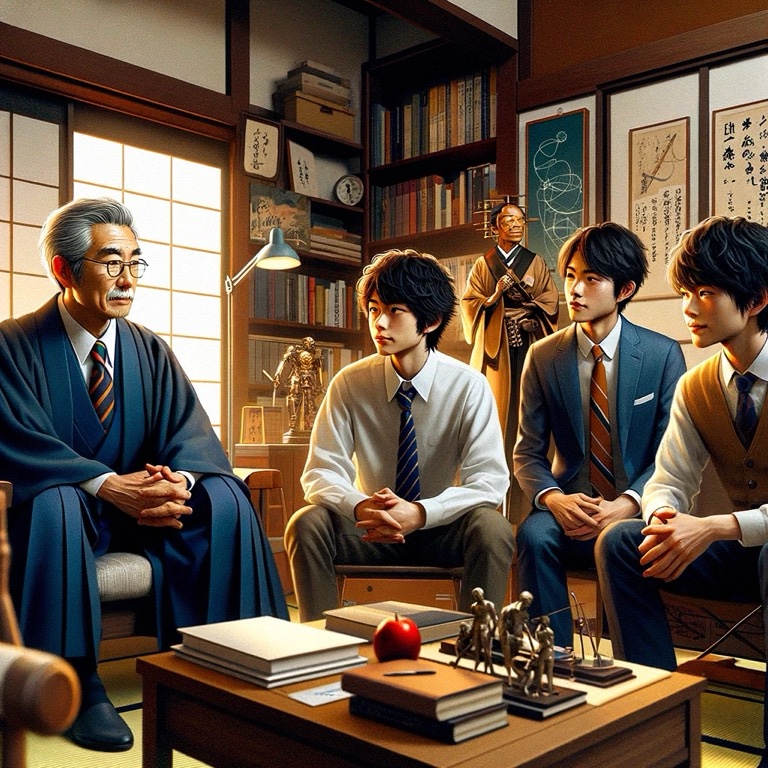
Finding My Own Path in a Family of Thinkers

Growing up in a family deeply rooted in academic and professional rigor, I was always surrounded by a world of logic and reasoning. My father, a lawyer in Japan, exemplifies precision and analytical thinking. My younger brother, continuing the tradition, serves as an Assistant Professor in Physics at The University of Tokyo. In our household, discussions were often laden with principles and theories, painting a picture of a family passionately devoted to intellectual pursuits.

As a teenager, I faced the daunting challenge of charting my own course. The expectations, perhaps unspoken yet palpable, nudged me towards the prestigious corridors of The University of Tokyo. It was a path that seemed almost predestined, and I embraced it, securing my place at the university as a regular student. However, as I reflect back, I recognize that this decision, while celebrated, was not entirely in alignment with my true nature.

I’ve come to realize that a life overly governed by logic and structured reasoning is not where my heart lies. The idea of living more freely, unencumbered by the constant need to analyze and rationalize, appeals to me greatly. I discovered that I thrive in environments where personal interactions and relationships take the forefront. This realization led me to my current profession in sales—a field that is challenging, undoubtedly, but one that resonates more deeply with my personality. It’s in the human connections, the face-to-face meetings, where I find my energy and purpose.

This journey of self-discovery and acceptance has taught me a vital lesson: it’s never too late to pursue a life that brings joy and fulfillment. As I stand today, I am more committed than ever to live life on my terms, embracing the opportunities to connect, engage, and enjoy the simpler, yet profoundly beautiful aspects of our existence. My family’s legacy of logical thinking will always be a part of me, but I now know that my path is distinct, guided by the heart as much as the mind.

In embracing this truth, I look forward to a future filled with joy, spontaneity, and genuine connections. It’s a future where I live not just as a thinker, but as a feeler, an explorer, and a seeker of life’s many untold stories.